The Agent Will See You Now: What Meta, Booking and Expedia’s AI Moves Mean for Your Direct Bookings
In one week, Cloudbeds, Booking Holdings and Expedia each moved to put AI agents between your hotel and your guest. One of those moves sends the booking to you as a direct reservation. The question for owners is which kind of AI channel you end up on.
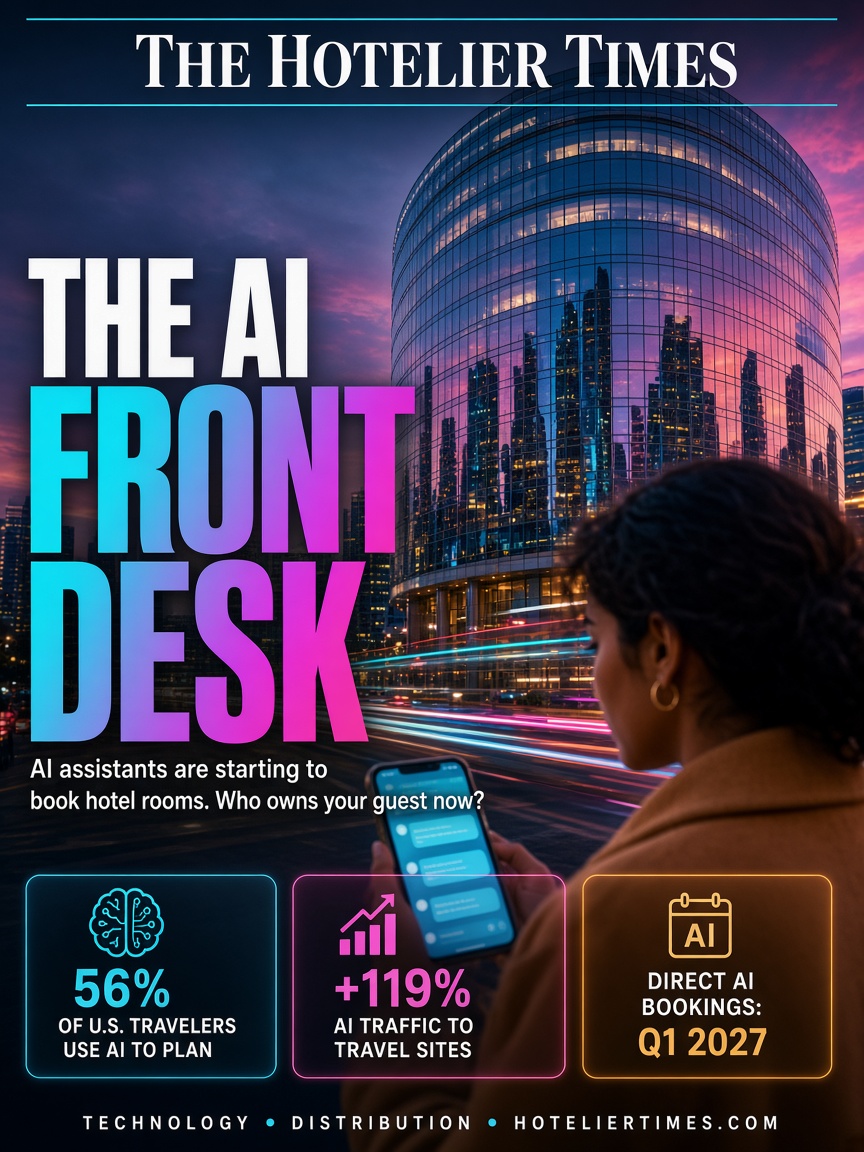
For 20 years the fight was over the search box. The new fight is over the assistant that does the searching for the guest. Three announcements between Oct. 14 and Oct. 20 show the big players are building for it now, and travelers are already there: 56% of active U.S. travelers used AI for travel in the past 12 months, up from 33% in the first half of 2025, according to Phocuswright.
The Three Moves, by the Numbers
- Q1 2027: when Cloudbeds says U.S. customers start appearing in Meta’s Muse AI agent with live rates, booked through their own booking engine.
- $100 million: Booking Holdings’ planned investment in Vayo, a personal AI travel service launched Oct. 14.
- Under 24 hours: how fast Expedia says a property can now go live on its marketplace, including what it calls “AI agentic bookings.”
Cloudbeds and Muse: A Direct Booking From an AI Agent
Cloudbeds said Oct. 20 it will connect its hotels to Muse, the personal AI agent Meta launched in September. Participating properties will show “live rates and availability” in Muse. The booking is completed in the hotel’s own Cloudbeds Booking Engine and lands in its property management system as a direct reservation, with no separate integration, according to Cloudbeds and PhocusWire. It is part of Cloudbeds’ Digital Marketing solutions. Cloudbeds has not disclosed what it will charge for it.
“The industry’s reflex is to let someone else own the guest and charge the hotelier for the privilege,” said Cloudbeds CEO Adam Harris. “We’re not doing that again.”
You won’t be alone in Muse. PhocusWire reports Expedia will also sell hotels there as merchant of record, with payment inside Muse and no date set. So the same agent may one day show a guest your direct rate next to an OTA listing for the same room.
Booking’s Vayo: Watching the Trip After It’s Booked
Vayo, a free, invite-only private beta, starts with the travel confirmations in a user’s inbox, pulls reservations into one itinerary, fills gaps and watches prices. It works with bookings made directly with hotels. Direct booking, a native app and shared planning are planned but not live, and the $100 million is “subject to continued advancement of the product and market conditions,” Booking Holdings said. “A trip isn’t a task, and travelers deserve more than a chatbot,” said Vayo CEO Mike Fridgen.
Here is the catch for you: a guest can book direct and still have a third party watching your rate afterward. As Hotel Technology News pointed out, price-watching could mean more cancel-and-rebook activity on refundable reservations. Vayo’s terms say it won’t cancel or rebook without the traveler’s explicit approval.
Expedia’s Autonomous Onboarding: The OTA Gets Easier to Join
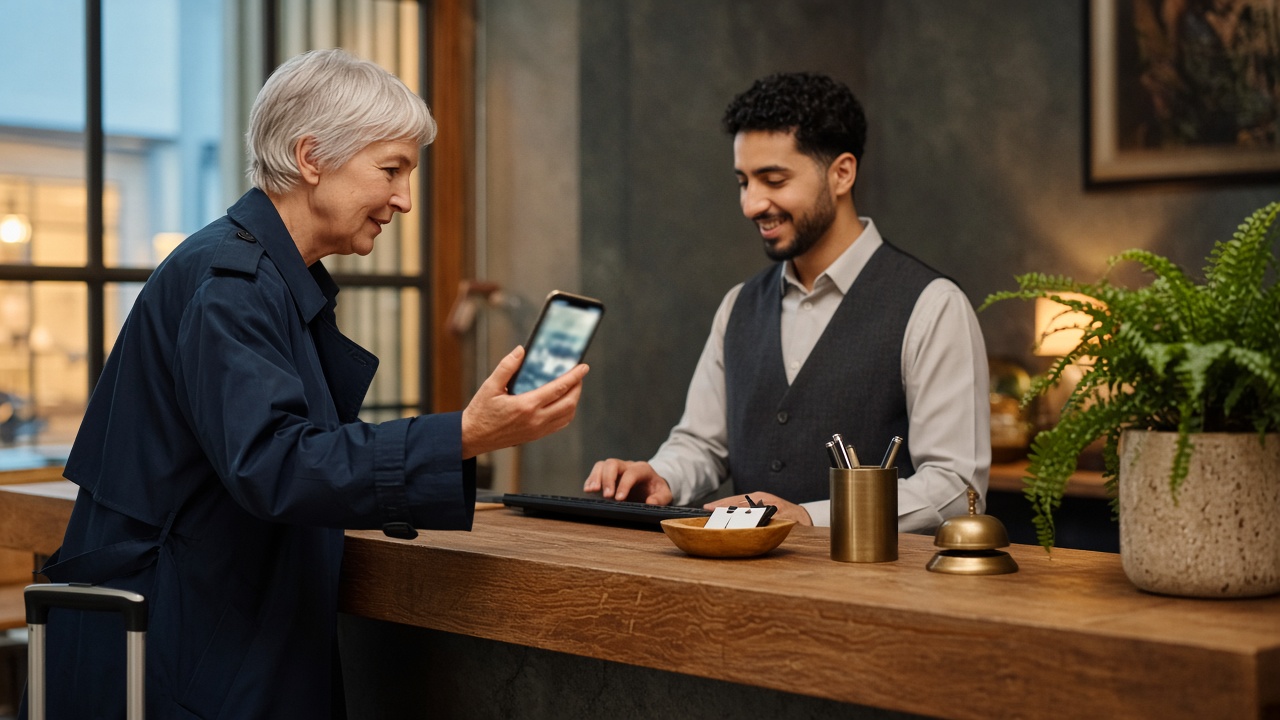
Also on Oct. 20, Expedia Group launched Autonomous Onboarding. A property picks Expedia inside its existing connectivity software, accepts the agreement, and Expedia pulls room types, rates, photos, amenities, payment setup and availability automatically. HotelRunner, Yanolja Cloud Solutions, RoomCloud, RateGain and Eviivo piloted it. “Adding a new source of demand should not add a new layer of work,” said Chris Hodges, Expedia’s VP of global connectivity and partner solutions.
Once live, you reach Expedia’s consumer brands, a B2B network of more than 75,000 partners and 200,000 travel advisors, and its AI partnerships. Expedia booked more than 415 million room nights in 2025.
That reach has a price. The antitrust class action we covered last week alleges Expedia takes about 15% of each booking, and 25% to 30% from hotels that pay for more visibility. Those are allegations, not findings, and Expedia has called the claims “meritless,” Travel Market News reported. Still, they are a useful benchmark for what the one-click option costs.
Google, OpenAI and the Brands Are Already There
Hotel booking inside Google’s AI Mode went live in the U.S. on Aug. 27, paid through Google Pay, with partners including Expedia, Booking, Marriott, Hilton, IHG, Choice and Wyndham. The hotel or OTA stays merchant of record, and there are no paid placements yet, though Google’s James Byers told PhocusWire ads are “an area we’ll experiment with.” Expedia, Booking and Accor have ChatGPT apps.
The brands are building their own front doors: Marriott’s Ask Bonvoy (beta since June), Hilton’s AI Planner (in beta since March) and IHG’s conversational search (U.S. beta since July). Hyatt CEO Mark Hoplamazian told Skift that AI search lifted conversion because “guests actually wanted to search with prose.”
How Fast Guests Are Moving
Adobe data for July showed AI-referred traffic to U.S. travel sites up 119% year over year, and converting only 1% below non-AI traffic, versus 47% below a year earlier. But trust lags: in an Expedia/YouGov survey of more than 5,700 adults in the U.S., U.K. and India, released in April, only 8% said they were comfortable booking through an AI platform, and 68% preferred a trusted brand. Guests are planning with AI now. Booking through it is still early, which gives you time.
Owners are already asking the bigger question. “We have a couple owners that are actually experimenting… ‘Do I need a brand with the advent of AI?'” Aimbridge’s Craig Smith said, according to Hotel Management. Peachtree’s Greg Friedman put it plainly: “If someone else can drive reservations at high rates, you’re going to go to that system.”

What This Means for Your Hotel
- Ask your PMS and booking engine vendor for its AI agent roadmap. Which agents will it connect to, when, at what fee, and will bookings arrive as direct reservations? Get dates and prices, not slides.
- Clean up your product data. Room types, inclusions, bed configurations and cancellation deadlines should match on your website, your brand system and every OTA. An agent that can’t tell a breakfast rate from a room-only rate will compare them anyway.
- Make your direct rate the best rate an agent can find. Member rates and value-adds only win if a machine can read them. Check what your booking engine shows without a login.
- Watch cancel-and-rebook on refundable rates. If assistants make rebooking easier, track it monthly and consider tighter deadlines on your lowest refundable rates.
- Measure net, not gross. For any AI channel, track revenue after commission, cancellations and replacement bookings, and whether those guests book direct next time.
- Read the agreement before you click “accept.” One-click OTA onboarding is convenient. The commission, parity terms and visibility programs are the same contract either way.
The Bottom Line
None of these new products is fully live at scale: Cloudbeds’ Muse link starts in Q1 2027, Vayo is an invite-only beta, and Expedia calls its onboarding a first phase. That gives you a few months. Use them to get your data, your vendor and your direct rate ready, so when an AI agent books your hotel, the reservation comes to you without a commission attached.
Sources and further reading
- Cloudbeds to launch direct-booking integration with Meta’s Muse — PhocusWire, 2026-10-20
- Cloudbeds Meta Muse integration announcement — Cloudbeds, 2026-10-20
- Expedia hotel booking in Meta’s Muse — PhocusWire
- Booking Holdings launches Vayo with planned $100M investment — Booking Holdings, 2026-10-14
- Booking Holdings Launches Vayo as AI Reshapes Hotel Distribution — Hotel Technology News, 2026-10-19
- Expedia Group Launches Autonomous Onboarding — Expedia Group via Business Wire, 2026-10-20
- Google AI Mode hotel booking — PhocusWire
- OpenAI Instant Checkout and travel intermediaries — PhocusWire
- Marriott introduces Ask Bonvoy — Marriott, 2026-06-16
- Hilton introduces the Hilton AI Planner — Hilton
- IHG launches AI conversational search — IHG
- Hyatt CEO sees lift from AI search — Skift, 2026-02-12
- The fastest shift in travel behavior just became the default — Phocuswright, March 2026
- U.S. consumers are embracing LLMs to make travel plans — Adobe
- Expedia Group reveals the AI trust gap — Expedia Group
- Owners press brands on value as AI reshapes booking — Hotel Management
- Expedia antitrust class action over hotel parity — Travel Market News
- Expedia in the Dock: What the Rate Parity Lawsuit Means for Hotel Owners — The Hotelier Times, 2026-10-18



Comments
No comments yet. Start the conversation.