Conversions vs. New Builds: Why Adaptive Reuse Is Emerging as the Strategic Preference for Hoteliers in 2026
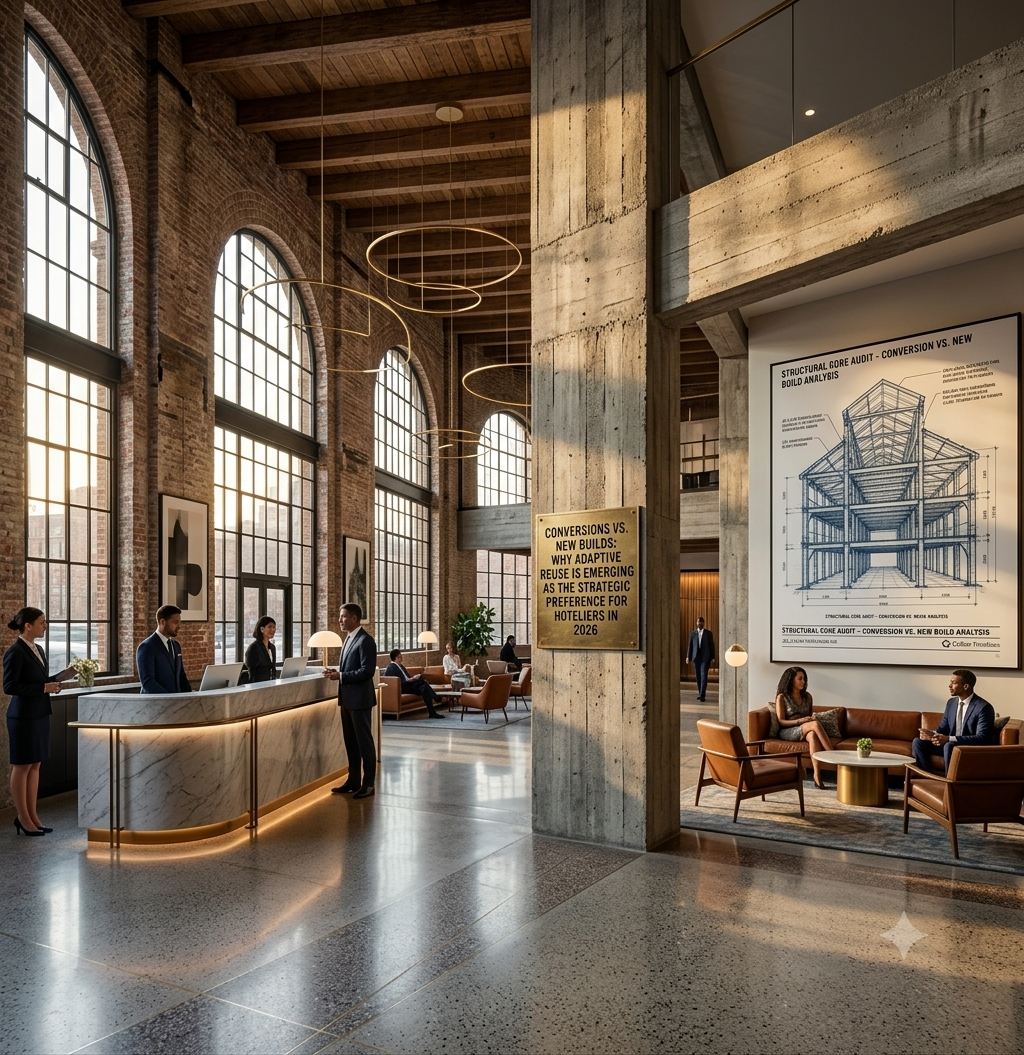
According to multiple industry reports, including analysis from JLL and HVS, the hospitality development landscape in 2026 is being shaped by elevated construction costs, constrained financing, and moderating demand growth. In this environment, adaptive reuse has gained significant traction as a viable and often superior alternative to ground-up hotel development.
The classic debate between breaking ground and retrofitting an existing building has taken on a sharp, financial urgency.
Stubbornly high interest rates, elevated construction costs, and moderating demand growth across key markets have fundamentally tilted the scales. What was once viewed as a niche compromise—converting historic offices, bank buildings, or underperforming properties—is now emerging as the most disciplined capital play in hospitality.
According to JLL’s Global Hotel Investment Outlook, slowing supply additions in major markets are actively driving up the value of existing assets. The strategic question for developers is no longer simply, “Should we build or convert?” Instead, it is: “Under what conditions does a conversion deliver superior risk-adjusted returns—and how do we execute it without falling into the classic traps?”
1. The Capital Reality: Hard Costs vs. Creative Savings
New hotel construction has simply become too expensive for standard underwriting to easily digest.
According to the HVS U.S. Hotel Development Cost Survey, median per-key costs for new builds are staggering:
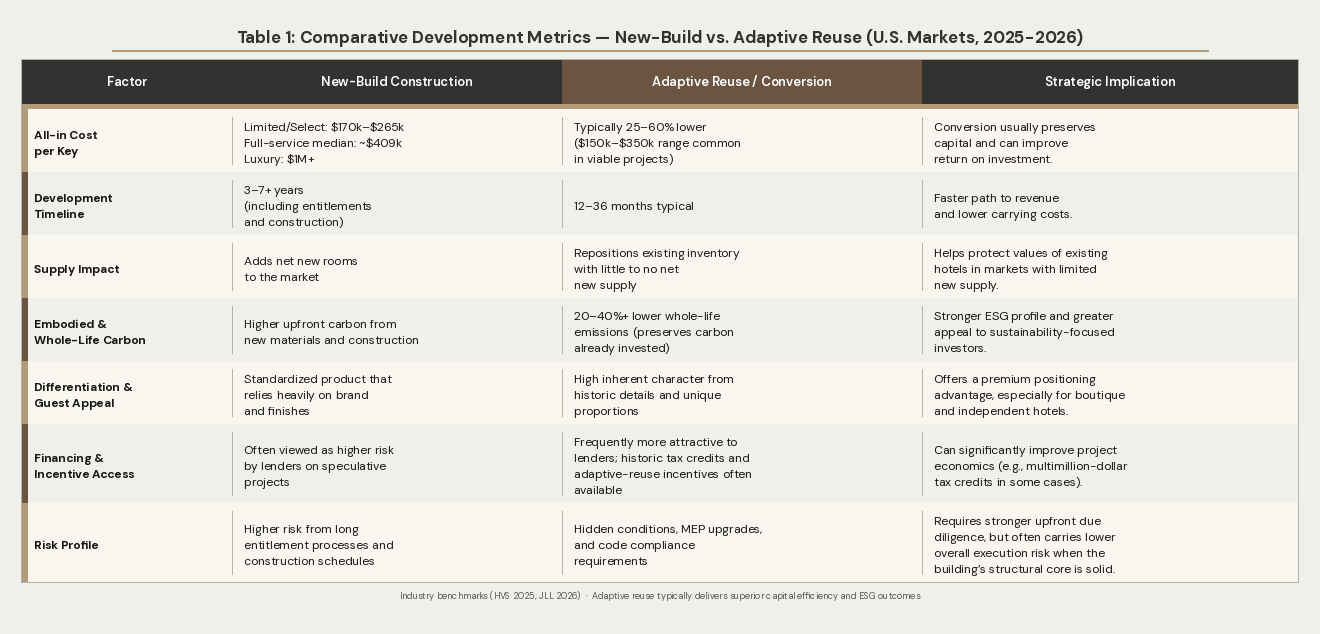
Limited-Service: about $168,000 per key; Select-Service: about $223,000 per key
Full-Service Properties: Approximately $409,000 per key
Luxury Projects: Easily eclipsing $1 million per key
In premium urban corridors, these numbers climb even higher.
By contrast, industry analyses show that a well-executed adaptive reuse project can deliver all-in costs 25% to 60% lower than comparable new construction. For an owner, preserving that upfront capital isn’t just a safety net—it fundamentally supercharges your eventual Return on Investment (ROI).
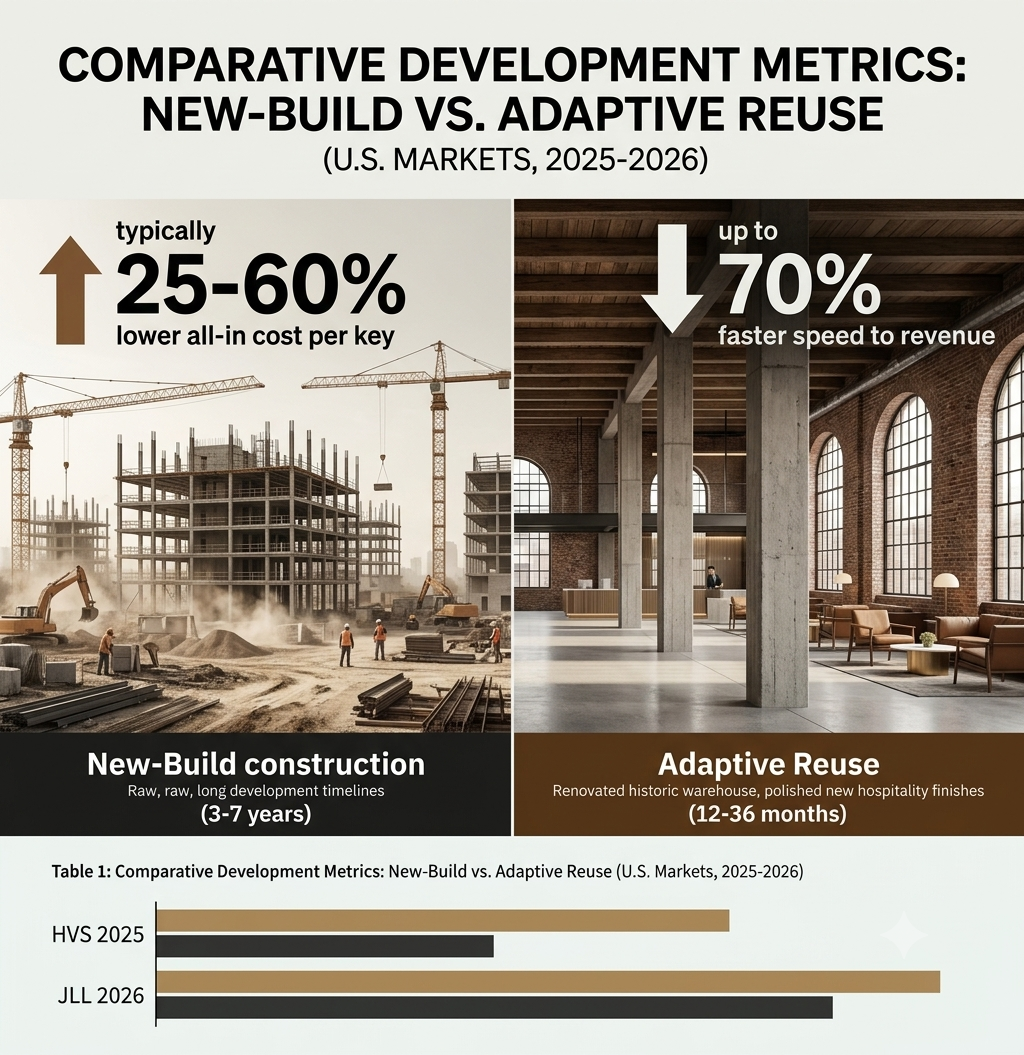
Table 1: Comparative Development Metrics — New-Build vs. Adaptive Reuse (U.S. Markets, 2025–2026)
2. Speed to Revenue: Bypassing the Carrying Costs
In a high-interest rate environment, time is a quiet developer-killer. Every month spent waiting on foundation pours and structural inspections is a month of paying interest on non-producing debt.
The New Build Runway: A brand-new build typically requires 3 to 7 years to move from initial concept and entitlements to grand opening.
The Adaptive Reuse Sprint: Conversions are routinely delivered in 12 to 36 months.
As highlighted by industry data from CoStar and Hotel Dive, compressing this timeline by several years dramatically reduces your interest carry, gets staff on the payroll sooner, and allows owners to capture active market demand instead of gambling on what the market will look like in 2030.
This speed is a major reason why Lodging Econometrics reports that conversion and renovation projects made up about a third of the U.S. hotel construction pipeline in early 2026: 2,041 of 6,020 projects at the end of the first quarter.
3. The Modern Traveler: Character Over Carbon
The case for adaptive reuse isn’t just financial—it’s also a powerful tool for guest acquisition and brand differentiation.
The Character Premium
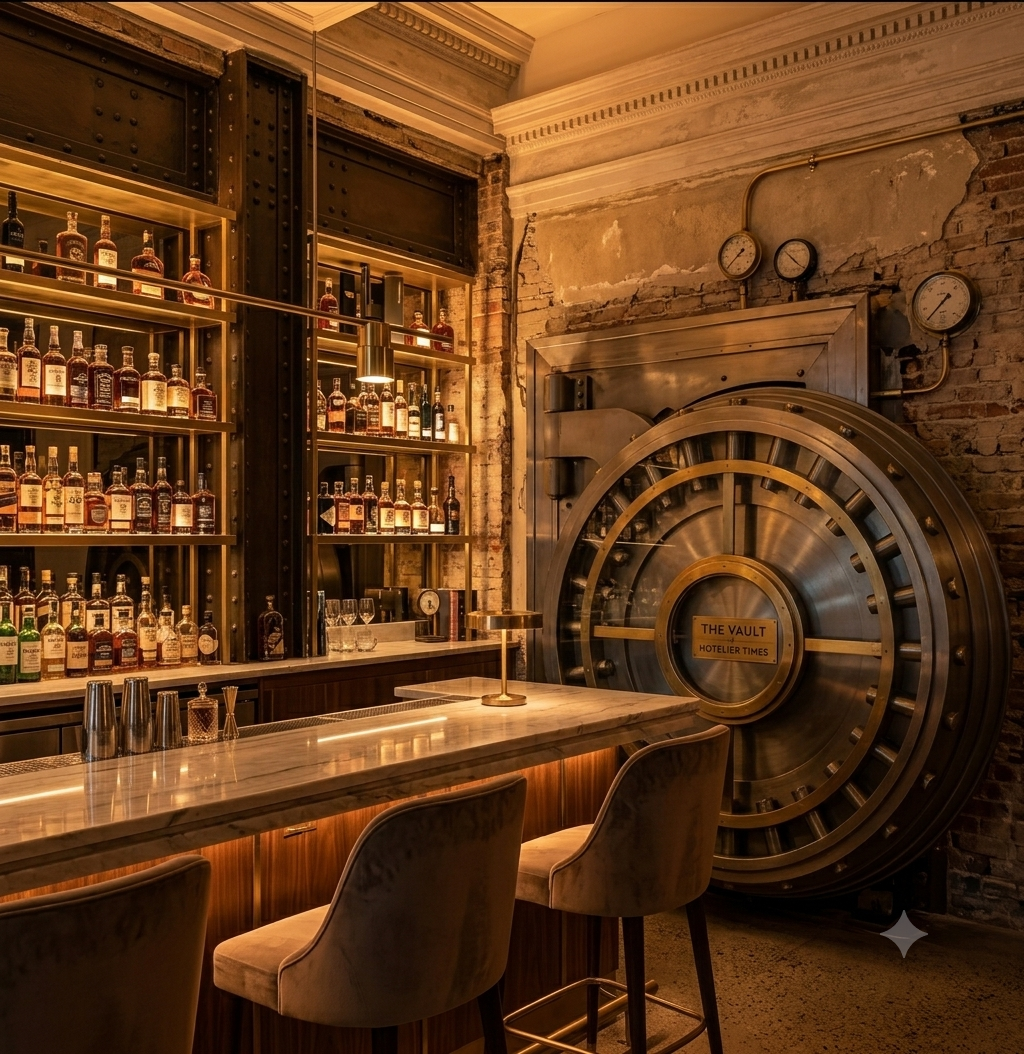
Today’s high-value travelers are experiencing “brand fatigue.” Standardized, cookie-cutter layouts that rely heavily on artificial finishes struggle to command the premium average daily rates (ADR) of boutique properties. Adaptive reuse projects inherit an immediate, organic story. Historic masonry, soaring lofted ceilings, and unique architectural quirks act as powerful marketing assets that are incredibly expensive to replicate from scratch.
The ESG Advantage
For institutional investors and sustainability-minded guests, the environmental math is clear. One 2023 life-cycle study found that repurposing existing non-residential buildings avoided 34% to 48% of the greenhouse gas emissions of demolishing and building new. In short: the greenest building is the one that is already built.
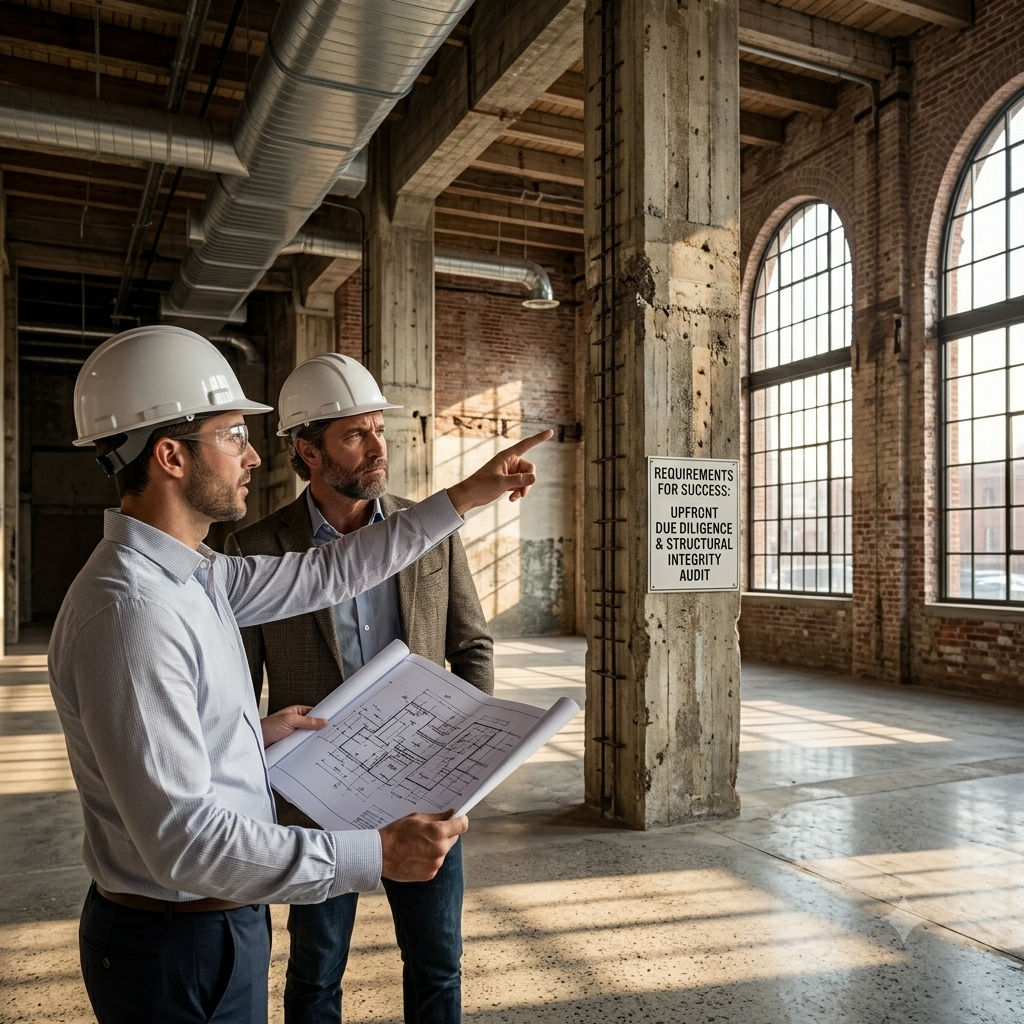
4. Navigating the Pitfalls: A Due Diligence Checklist
Adaptive reuse is highly lucrative, but it is not without its operational landmines. To prevent a dream conversion from turning into a financial nightmare, successful developers focus heavily on upfront risk mitigation.
⚠️ The Conversion Risk Profile
Unlike new builds, which face long entitlement processes and volatile material supply chains, conversions struggle with hidden physical conditions. Outdated mechanical, electrical, and plumbing (MEP) systems, asbestos, historic preservation constraints, and complex local code compliance can rapidly expand your scope of work if not identified early.
To guarantee execution success, seasoned operators should follow this checklist before closing on an asset:
[ ] Structural Audit: Prioritize buildings with highly resilient structural cores and manageable MEP upgrade paths.
[ ] Feasibility Parity: Commission independent market studies that directly compare the conversion’s upside against realistic local new-build alternatives.
[ ] Specialist Onboarding: Engage architects, engineers, and general contractors who have a proven, deep portfolio in adaptive reuse—not just ground-up construction.
[ ] Incentive Sourcing: Aggressively map out historic tax credits, municipal adaptive-reuse incentives, and opportunity zone benefits to offset costs.
[ ] Model the Flag: Run financial models for both branded (soft-brand) and fully independent operating structures; some properties perform significantly better when freed from rigid, standardized brand prototypes.
The Bottom Line
While ground-up construction will always hold a place for standardized select-service assets in high-growth suburban corridors, the smartest money is betting on repositioning.
For owners and developers aiming to build a resilient, distinctive portfolio, the most lucrative strategy may not involve pouring new concrete at all. It may simply be a matter of breathing new, profitable life into the legacy structures already standing right in front of us.
Strategic Recommendations
Hotel owners and developers considering adaptive reuse in 2026 should:
- Commission independent market and feasibility studies that compare conversion opportunities against realistic new-build alternatives.
- Prioritize buildings with sound structural cores and manageable MEP and code upgrade requirements.
- Engage architects, engineers, and contractors with proven adaptive-reuse experience early in the process.
- Explore available incentives, including historic tax credits, opportunity zones, and local adaptive-reuse programs.
- Model both branded and independent operating scenarios, as some conversions perform better without rigid flag standards.
The Bottom Line
JLL’s 2026 investment outlook highlights slower supply growth and increasing interest in value-add and repositioning strategies. In this environment, adaptive reuse is emerging as a disciplined, capital-efficient path for many hoteliers — particularly those seeking distinctive product, faster returns, and lower net new supply impact.
New construction will continue to play an important role, especially for standardized limited-service products in high-growth locations. However, for a growing number of markets and owners, the smartest development decision in 2026 may not involve pouring new concrete at all. It may involve breathing new life into what already stands.
References
CBRE. (n.d.). Office-to-hotel conversions: Resilient opportunities for downtown districts. https://www.cbre.com/insights/briefs
CoStar. (2025, May 30). Hotel conversions climb as new builds shrink. https://www.costar.com/article/651768205/hotel-conversions-climb-as-new-builds-shrink
Duliński, W., Taczalska-Ryniak, A., Zawada-Pęgiel, K., & Bystroń, M. (2025). Architectural sustainability through adaptive reuse: Design challenges and opportunities in the transformation of mid-to-late 20th century hotel buildings in Poland. Sustainability, 18(1), 119. https://doi.org/10.3390/su18010119
Gensler. (n.d.). WATERMARK Baton Rouge, Autograph Collection. https://www.gensler.com/projects/watermark-baton-rouge-autograph-collection
Gensler. (n.d.). The Kimpton Gray Hotel. https://www.gensler.com/projects/the-kimpton-gray-hotel
Gursel, A. P., et al. (2023). What are the energy and greenhouse gas benefits of repurposing non-residential buildings into apartments? Resources, Conservation and Recycling. https://escholarship.org/uc/item/1ht0b7w4
Hotel Dive. (2025, July 18). A guide to adaptive reuse in the hotel industry. https://www.hoteldive.com/news/adaptive-reuse-hotel-industry-guide/753500/
HVS. (2025, July 17). U.S. hotel development cost survey 2025. https://www.hvs.com/article/10219-hvs-us-hotel-development-cost-survey-2025
INREV. (2025). ESG case study: Jamestown adaptive reuse. https://www.inrev.org
JLL. (2026, February). Global hotel investment outlook 2026. https://www.jll.com/en-us/insights/market-outlook/global-hotel-investment
Lodging Econometrics. (2026, January). U.S. hotel development trends & projections newsletter – Winter 2025-2026. https://lodgingeconometrics.com/
Lodging Econometrics. (2026, April). Strong conversion and new development project totals in U.S. hotel construction pipeline – Q1 2026 close. https://lodgingeconometrics.com/
PwC. (2026). Hospitality and leisure: US deals 2026 midyear outlook. https://www.pwc.com/us/en/industries/consumer-markets/library/hospitality-and-leisure-deals-outlook.html
Sage Investment. (n.d.). Hotel conversion to apartments guide. https://www.sageinvestment.com/
Terrapin CG. (2026). Hotel construction cost per key (2026). https://terrapincg.com/news/hotel-construction-cost-per-key-2026
Additional supporting sources include reporting from MultiHousing News, GLR Inc., and Historic Hotels of America preservation documentation (2024–2026).
Correction, September 26, 2026: An earlier version of this article gave limited- and select-service development costs as $170,000 to $265,000 per key; HVS’s medians are about $168,000 and $223,000. It described conversions as a dominant share of development; they were about a third of the pipeline in early 2026. The carbon figure and two references have also been corrected.
Sources and further reading
- HVS U.S. Hotel Development Cost Survey 2025 — HVS, 2025-07-17
- Global Hotel Investment Outlook 2026 — JLL, 2026-02-03
- Strong Conversion and New Development Project Totals in the U.S. Hotel Construction Pipeline at Q1 2026 Close — Lodging Econometrics, 2026-04-27
- U.S. Hotel Development Trends & Projections Newsletter – Winter 2025/2026 — Lodging Econometrics, 2026-01-27
- Hotel Conversions Climb as New Builds Shrink — CoStar, 2025-05-30
- A guide to adaptive reuse in the hotel industry — Hotel Dive, 2025-07-18
- What are the energy and greenhouse gas benefits of repurposing non-residential buildings into apartments? — Resources, Conservation and Recycling (Gursel, Shehabi, Horvath; via eScholarship), 2023
- The Kimpton Gray Hotel — Gensler
- WATERMARK Baton Rouge, Autograph Collection — Gensler

Comments
No comments yet. Start the conversation.