+No Vacancy for Neutrality: Inside the Hotel Industry’s ICE Standoff
A canceled reservation at a Minnesota Hampton Inn set off a chain reaction that has now reached hotel lobbies from Manhattan to Fort Myers. Every property in the country is watching to see which side costs less.
The thesis is unsentimental and it is operational: a hotel that survives by being open to the public now faces two organized constituencies that will punish the same reservation decision in opposite directions. The federal government will pull contracts. Activist campaigns will occupy the lobby. Corporate brand standards will choose a lane and enforce it down the franchise line. The general manager who still treats this as a front-desk improvisation is the one who will learn the policy after it appears in a federal press release.
The emails that started it
On January 5, 2026, the Department of Homeland Security posted screenshots of messages it said came from a Hilton address at the Hampton Inn by Hilton in Lakeville, an independently owned property south of Minneapolis operated by Everpeak Hospitality. One note told government travelers the hotel had “noticed an influx of GOV reservations made today that have been for DHS” and was “not allowing any ICE or immigration agents to stay at our property.” A second, sent to a specific guest, said staff had found “information about immigration work connected with your name” and would cancel the reservation (Associated Press, 2026; CNN, 2026).
The cancellations did not land in a vacuum. They arrived in the middle of a large-scale DHS deployment to Minnesota — reporting at the time put the surge near 2,000 personnel, tied to a fraud investigation that the administration had framed around the Somali community and that immigrant-rights advocates called a pretext (Reuters, 2026; VisaVerge, 2026). The hotel was not turning away a handful of stray bookings. It was turning away a meaningful piece of an active federal lodging plan. DHS noticed immediately.
The government’s response was immediate and public
DHS Assistant Secretary Tricia McLaughlin did not go through channels. She went to the agency’s official account and used language that was not measured: “The men and women of ICE risk their personal safety to protect American communities and enforce the rule of law. Hilton Hotels is discriminating against our law enforcement agents and siding with murderers and rapists to deliberately undermine and impede DHS law enforcement from their mission” (VisaVerge, 2026; Fox News, 2026a).
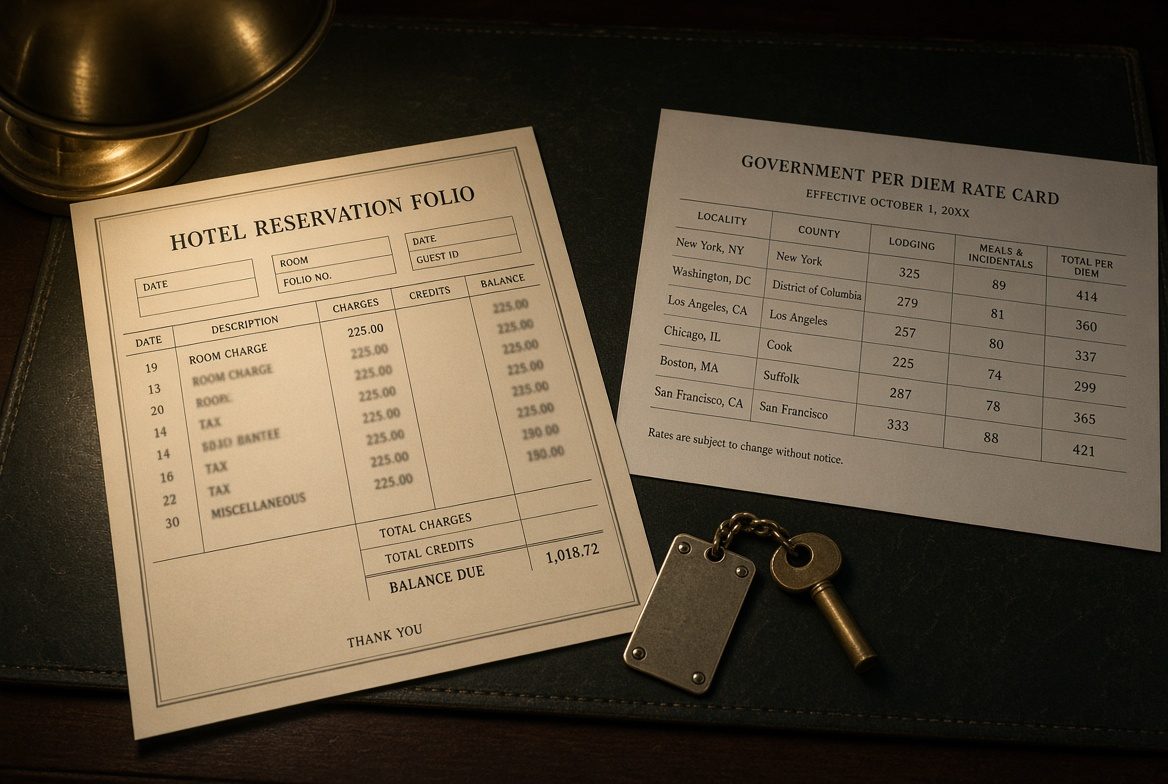
The General Services Administration moved just as fast. Administrator Edward C. Forst pulled the Lakeville property from every federal lodging program GSA operates — FedRooms, Emergency Lodging Services, and Long Term Lodging — effective immediately. “After I was informed that a local Hilton property canceled rooms reserved for ICE, GSA immediately reviewed the matter and found the hotel to be in clear violation of its government lodging program requirements,” Forst said. “GSA unequivocally supports our federal law enforcement partners” (GSA, 2026).
That sentence is the one every operator should keep. Participation in FedRooms is not a vibe. Hotels that join agree to honor government rates and accommodate travelers conducting official business, without carving out a favorite-agency exception (GSA, 2026; Black Enterprise, 2026).
Hilton corporate put daylight between itself and the franchisee within days. The brand first said the property was independently owned, that the messages did not reflect policy, and that “our properties are open to everyone and we do not tolerate any form of discrimination” (Associated Press, 2026; CNN, 2026). After a video appeared to show the desk still turning federal travelers away, Hilton terminated the franchise and removed the hotel from its systems. A crane came for the sign (Fox News, 2026b). Everpeak issued its own apology. Markets noticed: Hilton’s stock closed down about 2.5 percent the Monday after the story broke — a small move, and a real one.
Minnesota was the spark. It was not the fire.
What makes this a hospitality-industry story rather than a one-property news blip is what happened next, in city after city, over the following months.
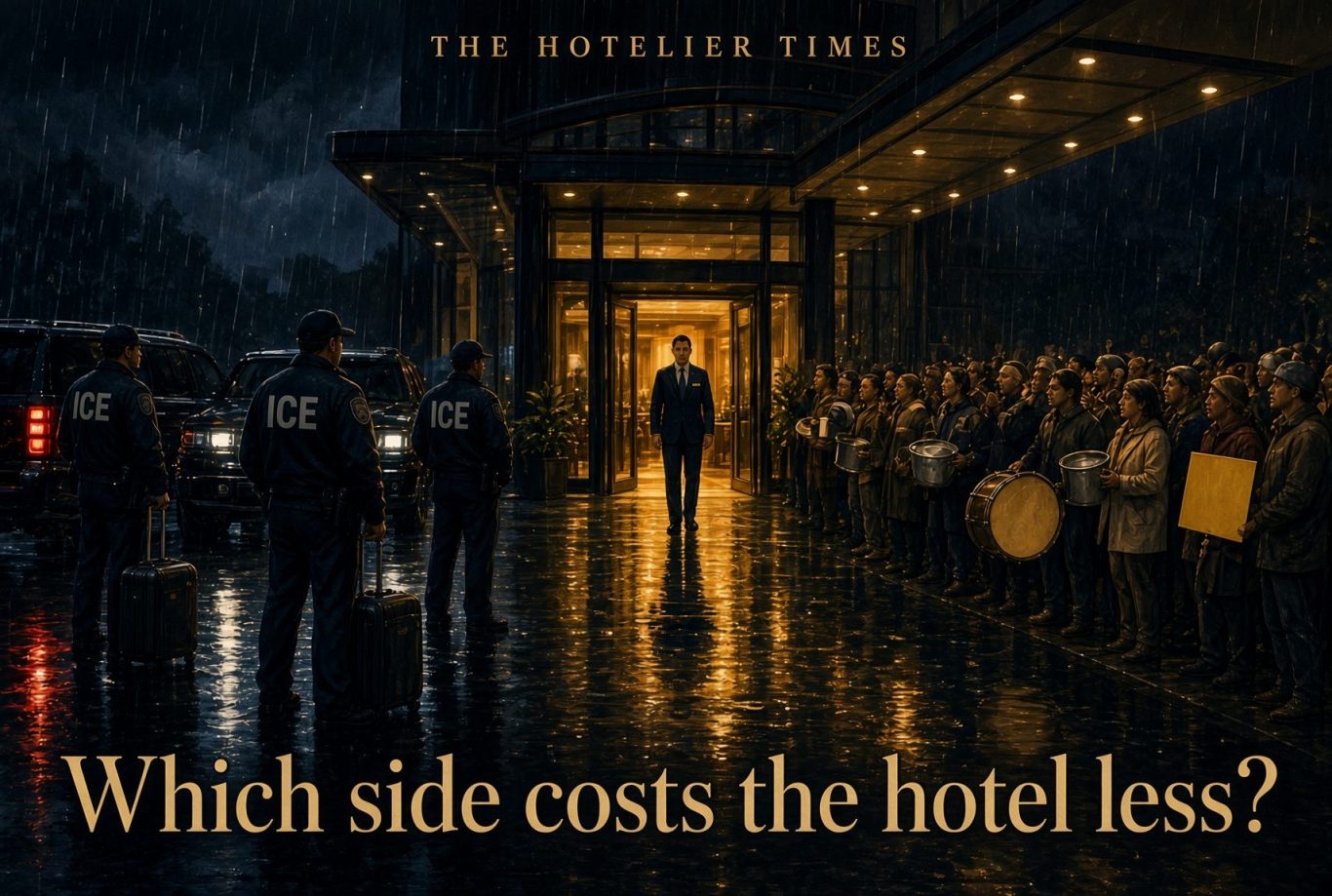
In late January, dozens of protesters occupied the lobby of a Hilton Garden Inn in Manhattan’s Tribeca neighborhood, alleging — without confirmation ever obtained in the public record — that immigration agents were staying there. The NYPD arrested 66 people; most received summonses for trespassing and disorderly conduct. Organizer Michael-Luca Natt of Sunrise Movement NYC told reporters the group had been “tracking ICE movements and ICE actions.” New York City Mayor Zohran Mamdani’s office publicly commended the protesters as a peaceful exercise of rights. Neither Hilton corporate nor DHS answered press inquiries about that specific property (NY1, 2026; FOX 5 New York, 2026).
In August, roughly 150 people gathered outside the Luminary Hotel in downtown Fort Myers, Florida, after word spread that around 100 ICE agents from Miami had been lodging across four area hotels. Organizer James Abraham invoked Minnesota directly as a template: “Because of the amount of protests, they changed their complete approach.” One attendee, 20-year-old Shane Hudson, put the moment simply: “Everybody should fight. Everybody has a hand in this” (WGCU, 2026).
Separately from the protests, a DoubleTree property was forced to close after receiving bomb threats while ICE agents were staying there — a distinct kind of incident that Hilton CEO Christopher Nassetta was careful to characterize as a safety and security issue affecting every guest and employee on the property, not a moral stance the hotel had taken. That distinction matters. It is also cold comfort to the night auditor standing in the lobby when the threat arrives.

Comments
No comments yet. Start the conversation.