The $300 Question: Why RestAssure Wants Hotels to Retire the Incidental Hold

There is a sentence spoken at almost every front desk in America, and almost nobody thinks about it. It goes something like this: “We’ll just need a card for incidentals.”
The guest hands it over. A few hundred dollars vanish from their available balance before they have seen the room. Nothing has gone wrong. Nothing has been broken. The hotel is simply holding money against the chance that something might.
Ashley Kovatchev, founder of RestAssure, wants to change that moment. In one of the company’s short spots, the front desk agent offers a choice instead: “Would you like me to hold your credit card for $300 in incidentals tonight, or would you like to sleep rest assured for $5.95?” For the guest, it’s a no-brainer.
The hold nobody notices, except the guest
Big problems are easy to see. Small ones hide in plain sight because everyone has stopped looking at them. The incidental hold is one of those.
Kovatchev’s case starts with scale. “Every night, hotels freeze 500 million to a billion dollars on guest cards,” she says in her founder video. “That’s purchasing power parked, frozen every single day. That money isn’t at dinner or in the local shops.” (Her estimate; the video does not give a source.)
Then she makes it personal. “A family at Disneyland faces a $300 hold before the vacation even starts,” she says. “It eats into their budget.” RestAssure’s video for hoteliers adds that traditional holds “freeze funds for 7 to 10 days and too often lead to disputes and negative reviews.” (Company claim.)
Here is the part owners tend to miss. The hold is not really about the hundreds of guests who never break anything. It is about the one who does. It is the hotel’s safety net for the bad night: the spill, the broken lamp, the dog. And it makes every guest pay for that reflex, in frozen dollars, at the moment the hotel most wants them to feel welcome.
Putting a number on it
Kovatchev’s figure is her own estimate. We wanted to see whether it holds up, so we ran a rough version of the math ourselves, using only published numbers.
An illustration, not a measurement
How much guest money might $300 holds tie up on a single night across seven big hotel companies?
| Company | Rooms, global system (Sept. 30, 2026) |
|---|---|
| Marriott | 1,833,801 |
| Hilton | 1,408,417 |
| IHG | 1,059,806 |
| Accor | 885,219 |
| Wyndham | 877,400 |
| Choice | 660,614 |
| Hyatt | 380,217 |
| Total | 7,105,474 |
The math:
7,105,474 rooms × 62.3% occupancy ≈ 4.43 million occupied rooms on a typical night
4.43 million occupied rooms × $300 hold ≈ $1.33 billion held on guest cards
Assumptions: Room counts are each company’s published global system total as of Sept. 30, 2026. Accor reports a global figure, so all seven use global totals, and some companies count timeshare or residential units in their systems. Occupancy is CoStar’s 2025 U.S. average (62.3%), applied to every room as a simplifying assumption. We assume one $300 hold per occupied room per night. In practice, hold amounts vary and not every hotel takes one.
That is one night, from seven companies. It leaves out independent hotels and other brands, and the days a hold can linger after checkout. It also assumes every hotel takes a full $300, which many do not. Treat it as an order of magnitude, not a count. Even so, it puts Kovatchev’s 500 million to a billion dollars a night in plausible territory.
The bigger question is not the exact number. It is whether the practice really serves the guest, or whether there is a better alternative. A hold protects the hotel against a bad night that, for most guests, never comes. The guest pays for that protection with money they cannot spend while they are on the trip.
What RestAssure actually is
RestAssure describes itself on its website as “a guest dispute resolution platform built for hotels,” providing “24/7 support tools, documentation workflows, and communication resources that help hotels respond to guest concerns quickly, consistently, and professionally.”
The model has three steps. The hotel subscribes to the platform. The hotel may then offer guests an optional guest support fee at check-in, which the company says is “often used as an alternative to traditional incidental holds.” The hotel sets and controls that price. When something goes wrong, guests are directed to RestAssure’s portal, and the platform handles the documentation and resolution workflow.
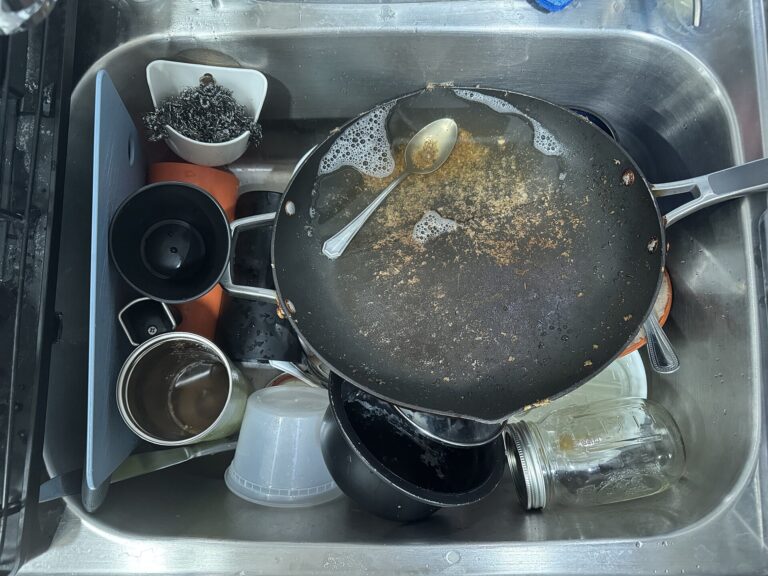
The company lists four kinds of trouble it is built for: accidental room concerns such as spills and breaks, injury-related incidents (routed to management through what it calls a “safety-first workflow”), missing personal items, and pet-related problems.
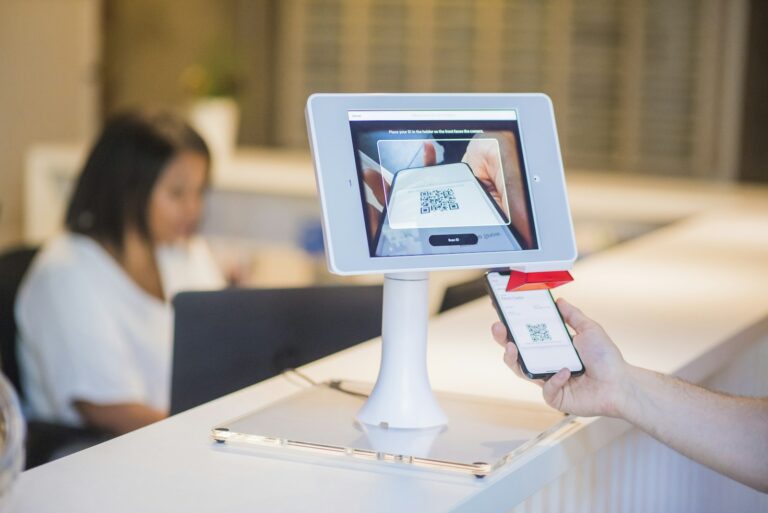
In RestAssure’s webinar, the company says its platform “offers immediate support via phone, text, and email,” captures “guest and staff statements, pictures, and video,” and “delivers goodwill gestures quickly, usually within minutes.” Guests can reach the portal on the hotel’s guest Wi-Fi, through the front desk, or by scanning a QR code on an in-room information card. The webinar also demonstrates a voice support agent answering a guest’s call.
In a note to The Hotelier Times, Kovatchev filled in what goes into that record. According to RestAssure, the platform can collect guest statements, photos and videos, camera footage the hotel uploads, and other supporting records. The company says it uses AI to help organize the file, flag possible signs of fraud and support communication with the guest. Guests reach it by QR code, and not only to complain: the company says the same code works for positive feedback, too.
Her larger point is about people, not paperwork. Many guests, she says, simply want to be heard and have an issue acknowledged, rather than necessarily seeking compensation.
Kovatchev puts the whole idea in one line: “RestAssure resolves disputes on a timestamped record instead of weaponizing a hold against your guests.” And then, more simply: “When a kid jumps on the bed and breaks a lamp, the trip shouldn’t end. Release the hold, keep the fee.”
What it is not, and why that matters
This is the section owners should read twice, because the company itself is emphatic about it.
RestAssure says it is not insurance and “does not provide coverage or guaranteed compensation.” Any refund, credit or goodwill gesture is “voluntary, hotel-funded, and determined solely by the hotel.” The company says it “does not collect guest fees and does not pay guests.” The hotel collects the optional fee directly.
It also does not replace a hotel’s policies, deposit rules or legal requirements, and it is not a legal service. For injuries, RestAssure’s FAQ says guests should contact the hotel directly and get medical care if needed, and that RestAssure “does not determine liability and does not negotiate settlements.” Liability is a live issue for owners right now, as dozens of lawsuits against Motel 6 franchisees in East Texas show.
That shapes what your desk agents say. RestAssure tells hotels to avoid the words “coverage,” “policy,” “claim” and “insurance” at check-in. Its suggested script: “Your hotel participates in a Guest Support & Resolution Program that helps document and resolve stay concerns through a structured process.”
The business case
The pitch to owners is two-sided: a friendlier check-in for guests, and a new line of revenue for the hotel.
“Hoteliers who offer RestAssure see happier guests, fewer disputes, and stronger loyalty,” the company’s hotelier video says. “Families, business travelers, and pet owners all appreciate a stress-free stay, and they remember the hotel that cared enough to offer it.” (Company claim.)
On money, the webinar says RestAssure can create “from $50,000 to $100,000 in new annual revenue” for a 100-room hotel at 71% occupancy. (Company estimate; actual results depend on how many guests take the fee.) The website has an estimator that asks for room count, ADA rooms (priced at an extra $25 per room) and your online rating. With its default inputs of 100 rooms and a 4.2-star rating, it estimated a monthly subscription of $402 when we checked, with guest fee scenarios from $4.95 to $9.95 a night. The site is clear that these are estimates that “may vary based on occupancy, guest participation, seasonality, property policies, and other operational factors.” So run it the honest way: with your real occupancy and a realistic share of guests who will say yes, not every room every night.
RestAssure Revenue Estimator
Estimate the gross guest fees collected at your hotel. An estimate only; change any number.
Your hotel sets its own fee. $5.95 is a common starting point.
Enter a fee above $0.
How it works: rooms × occupancy × share of guests who keep RestAssure × nightly fee × 365. The $5.95 default is the nightly rate on RestAssure’s guest card (“automatically added at check-in at $5.95 per night”; guests may opt out at the front desk, and if they do, “a standard $200 incidental credit-card authorization may apply”). Your hotel chooses its own fee, so set any amount; for reference, RestAssure’s estimator shows $4.95 to $9.95 scenarios. The 60% occupancy default is the one RestAssure’s webinar uses; the share who keep it is your assumption. This is gross fees collected, not profit: it does not subtract RestAssure’s monthly subscription, goodwill gestures or taxes, and real results vary with occupancy, guest participation, seasonality and property policies.
Powered by RestAssure, a Hotelier Times featured partner.
On the folio, the webinar says that once RestAssure is integrated with the hotel’s systems, the fee posts as “a clear, transparent line item on the guest’s hotel receipt,” and guests who prefer not to participate can opt out by scanning a QR code.
Signing up follows what the site calls “A, B, C”: create a hotel account, set your guest support fee, start using the platform. RestAssure says it is built for independent hotels, boutique properties, franchise groups and hotel operators.
Nor is it meant to rip out what a hotel already runs. Rather than replacing existing hotel software or payment systems, RestAssure says the platform could complement current workflows, and the company sees an opportunity to explore partnerships with property-management software companies and hotel technology providers.
The guest’s side of the desk
The consumer spots are aimed at the same two travelers every GM knows well.
The first is the family on vacation. “I avoid large credit card holds that freeze my spending money,” the narrator says in one spot, “especially for amusement parks, dining, and making unforgettable memories with my family.”
The second is the pet owner. RestAssure’s homepage puts it gently: “Because even great pets can have unexpected moments.” Its pet spot puts it with a little more drama.
Sitting down with Ashley Kovatchev
Ashley Kovatchev founded RestAssure, a 100% minority- and woman-owned company, around one idea: hotels should stop freezing their guests’ money at check-in. We asked her to make the case.
What made you start RestAssure?
After writing hotel insurance for over 15 years, I was tired of watching insurance rates rise every single year. That’s when I knew I wanted to do something about it.
Let’s zoom out. What’s the problem you’re trying to solve?
Every night, hotels freeze 500 million to a billion dollars on guest cards. That’s purchasing power parked, frozen every single day. So the question is: why aren’t hotels changing the economy with one simple step?
Frozen where, exactly? Who feels it?
That money isn’t out at dinner or in the local shops. It’s locked away instead of supporting the community.
So what’s the one simple step?
Disrupt that hold at check-in. Keep the card on file and set a nightly fee. RestAssure resolves disputes on a timestamped record, instead of weaponizing a hold against your guests.
Make it real for me. What does that look like for an actual guest?
Picture a family at Disneyland facing a $300 hold before the vacation even starts. It eats into their budget. And when a kid jumps on the bed and breaks a lamp, the trip shouldn’t end there. Release the hold, keep the fee.
Why should hotels be the ones to lead on this?
Because hospitality can lead the way to a better night’s rest, for guests and for local businesses.
And if a traveler is reading this?
Look for hotels that use RestAssure, and support the movement to unfreeze holds for our economy.
Beyond the front desk
Kovatchev’s ambitions are bigger than the incidental hold.
In her view as RestAssure’s founder, when guests have hundreds of dollars temporarily restricted, it may affect their ability or willingness to spend at restaurants, attractions, local businesses and other destinations. Could reducing that restriction help support local tourism spending, business activity and employment? She frames it as an economic angle worth investigating, not a measured effect.
The company also sees its process traveling well past hospitality. RestAssure describes its process as patent-pending, and says it and the documentation platform may have applications wherever incidents and disputes require reliable documentation: workers’ compensation claims, landlord-tenant disputes, police departments and domestic-violence support units, automotive and property claims, and retail and customer-service disputes. Hotels, in Kovatchev’s telling, could be the starting point for a much larger discussion about documentation, accountability and dispute resolution.
Back to the desk
The genius of a good idea is often that it is boring. Nobody will ever write a song about the incidental hold. But it is the first financial thing a hotel does to a guest, every single night, and most hotels have never asked whether there is a better way to do it.
Kovatchev’s answer is a small fee, a clear record and a fast response. Whether that beats a $300 hold at your property comes down to your guests, your brand and your desk. It is a question worth asking before your next guest hands over a card.
Have a question about RestAssure? Ask Frank, RestAssure’s AI voice assistant, in the bottom-right corner of the RestAssure homepage. Frank helps document incidents and can handle any question about RestAssure, so go ahead and put him to the test.
Watch the webinar here
RestAssure is a featured partner of The Hotelier Times. Learn more at restassurehotels.com.


Comments
No comments yet. Start the conversation.