+$89 at dinner, $450 by dessert: Airport hotels cashed in on the FAA meltdown. Was it gouging?
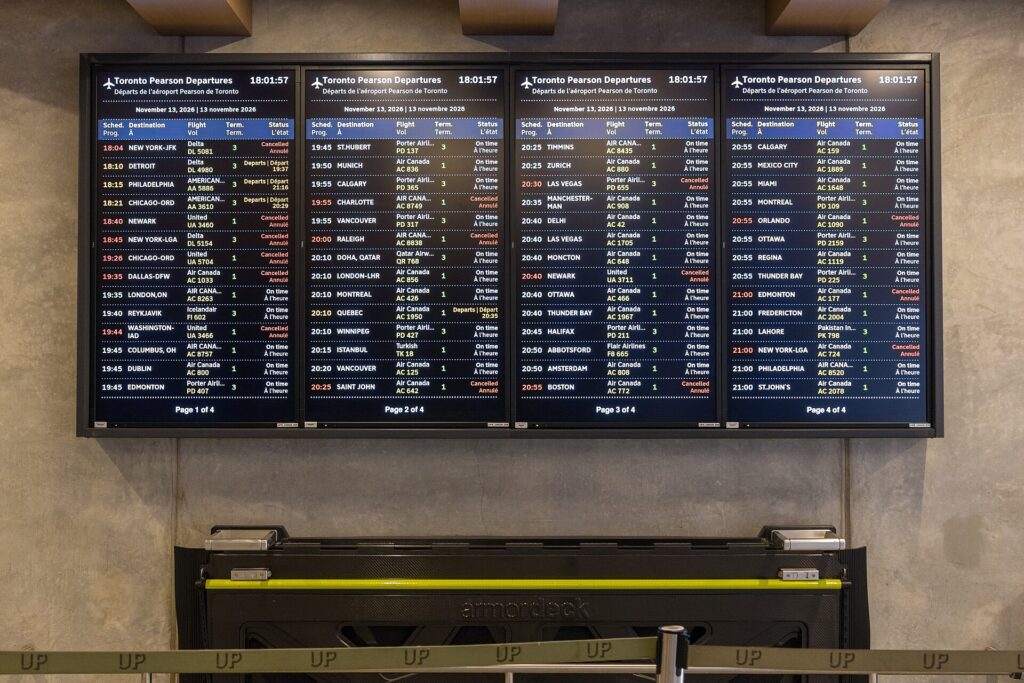
Washington can’t agree on why the system crashed. The airlines say they don’t owe anyone a room. That left hotels making the pricing call, and owning how it looks.
Paul Richards spent Friday night on the phone with stranded travelers near Denver International Airport. By his count he talked to more than 300 of them. He works with several hotels near the airport to fill empty rooms, and on Nov. 13 empty rooms were not the problem.
Rooms that normally go for about $100 went for “$400, $500 a room,” he told Denver7. Some people were ready to pay $300 and still couldn’t find anything. One traveler, Chris Jimenez, said his rate went from $89 to about $450 in a couple of hours. A server at a nearby diner said some hotels wouldn’t sell a single night at all. Three-night minimum, take it or leave it. Some travelers paid about $75 for a ride to a hotel and were told at the desk there was nothing left. A lot of them slept in the terminal or in their cars.
That was Denver. In Atlanta, a traveler told Atlanta News First that “everything is sold out, even rental cars.” At Hartsfield-Jackson, the world’s busiest airport, more than 750 flights were canceled on Friday alone, and people slept on the concourse floors.
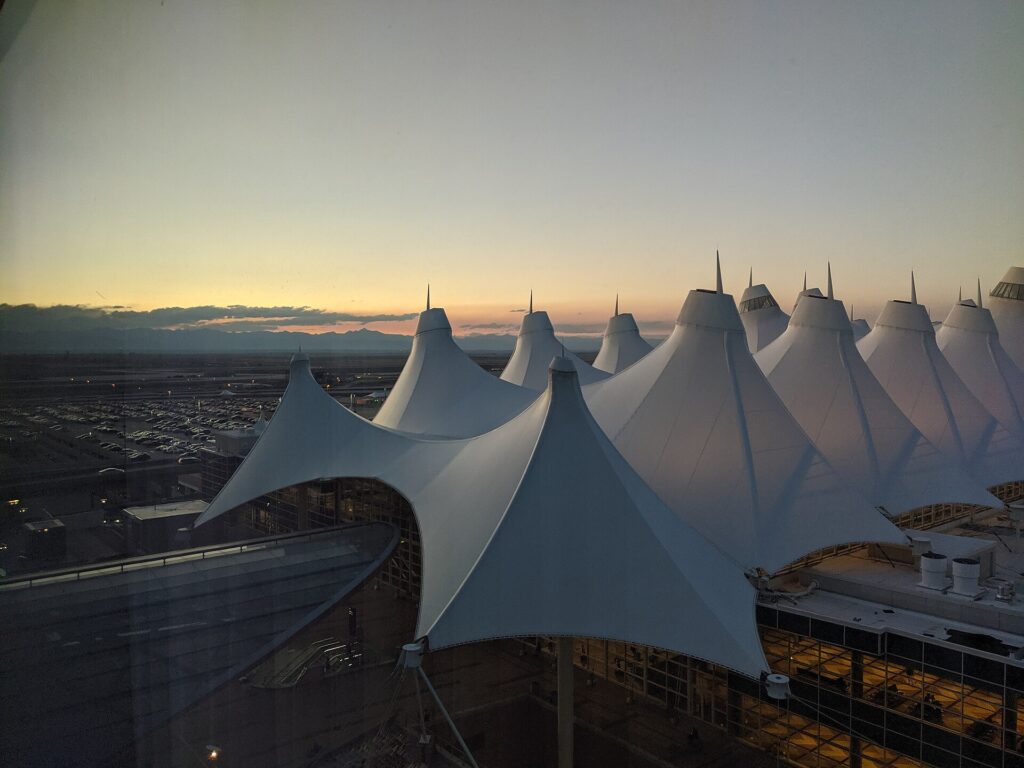
Now picture every hub in the country, all at once, on a Friday night.
What happened
On the afternoon of Friday, Nov. 13, the FAA stopped every departing flight in the United States. When the order came down “out of an abundance of caution,” about 3,500 flights were already in the air, the Atlanta Journal-Constitution reported. The halt lasted 4 hours and 21 minutes, the longest nationwide stop since Sept. 11, 2001, according to Travelers Today.
The counts vary depending on who’s counting, but none of them are small. Travelers Today put Friday’s cancellations at more than 6,600, with 8,600 more delayed. The AJC reported 12,000 flights canceled nationwide on Friday, counting 9,000 commercial and 3,000 private flights. On Saturday, FlightAware counted another 6,692 cancellations and 8,723 delays. Airlines were still digging out on Monday.
For perspective, the last big FAA system failure, the NOTAM outage in January 2023, took the system down for about 90 minutes. This one ran nearly three times as long.
Nobody can agree on why
A week later, the government still hasn’t given a single answer.
Transportation Secretary Sean Duffy described an aging communications system that got overloaded with data. Switches and routers failed, he said, and the FAA shut things down when the data became inconsistent. He said the new equipment stayed online and “the old hardware” failed.
Homeland Security Secretary Markwayne Mullin, calling his account preliminary, said something different. As Duffy and the FAA were patching the system, he said, the new equipment and technology overwhelmed the older system. That would tie the outage to the government’s own upgrade work the day before.
Duffy later said officials were “still working on the details of what went wrong.”
Meanwhile, the money talk started right away. Congress approved $12.5 billion over five years for air traffic control improvements and controller hiring in July 2025. The administration was already asking for another $30.1 billion the same Friday the system went down.
So: the government broke the system, or the old system broke itself, or the fix broke it. Pick one. The traveler standing in your lobby doesn’t care which.
What hotels made
Keep reading
Keep reading with full access: a 24-hour Day Pass is $1.39, or $1.99 your first month, then $3.99/mo — or $19.95/year (Save $27.93 a year vs. $3.99/mo, about 58%).
Already a member? Log in




Comments
No comments yet. Start the conversation.