+“Forget Hotels” Is Officially Dead: What Airbnb’s Pivot Actually Means for You
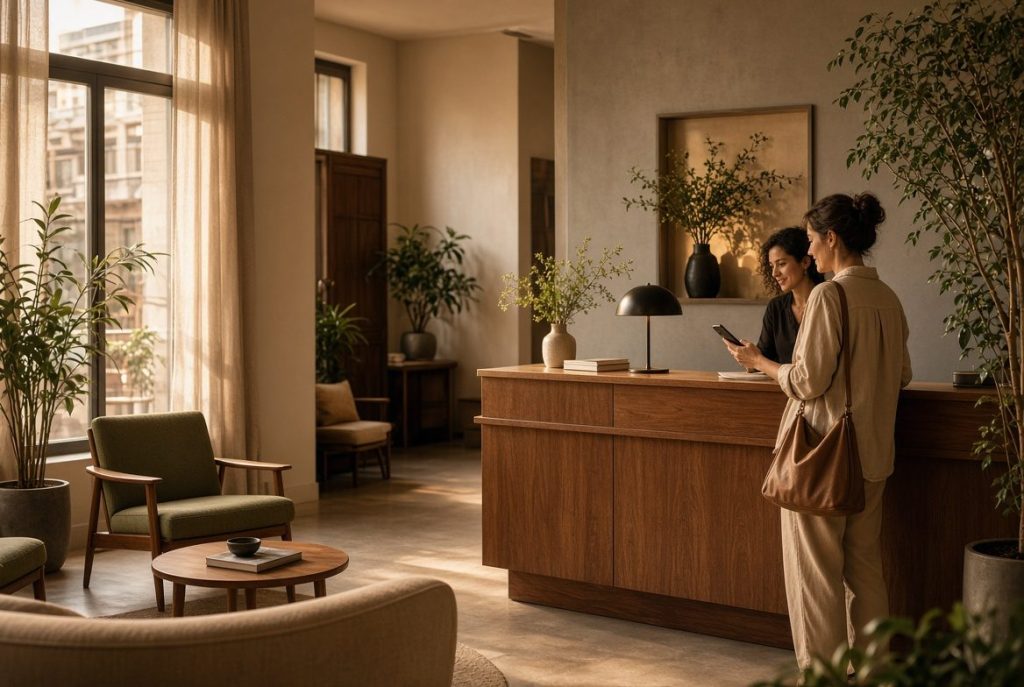
Airbnb’s founding tagline told travelers to skip hotels entirely. Now nearly 4,000 hotels are listed on the platform, commissions undercut the usual OTAs, and the company is courting independent operators by name. The question is not whether this is real. It is whether you can trust it.
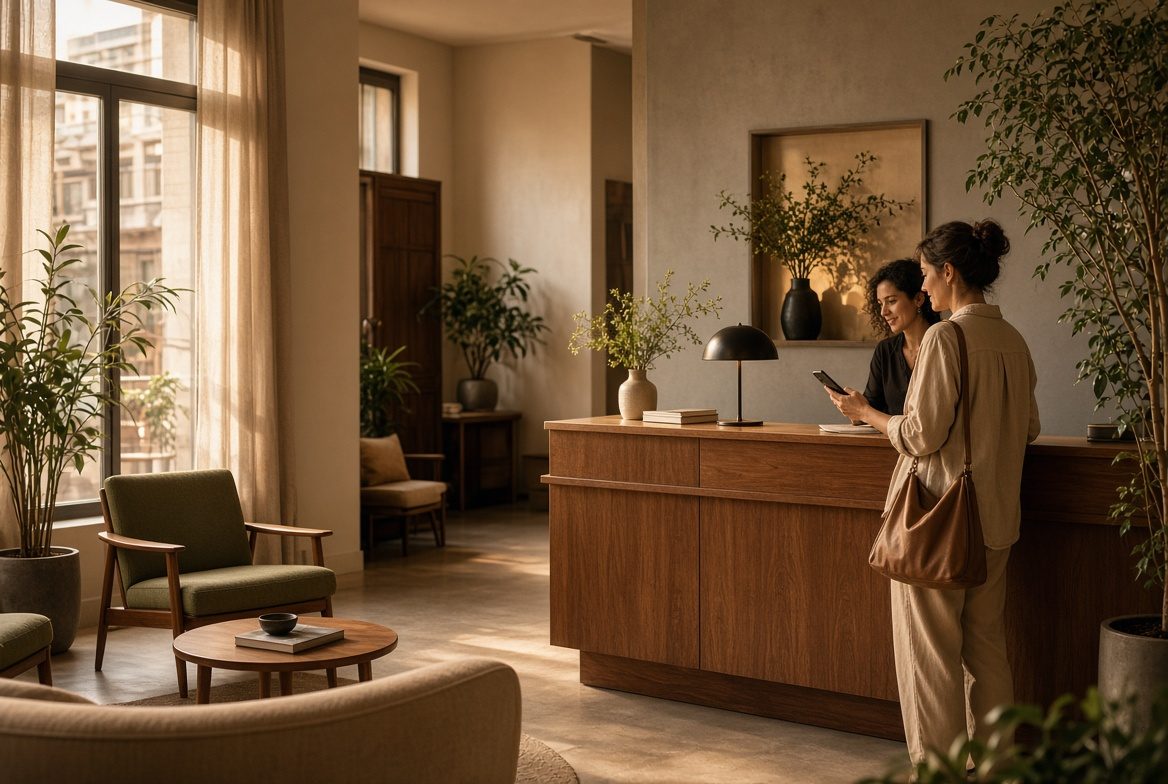
Airbnb’s original tagline was “Forget hotels.” Brian Chesky has now said the quiet part out loud: “At some point, I stopped being ideological. I started becoming practical.” That admission — from the company’s own chief executive — is worth sitting with before getting into the numbers, because it tells you this pivot is not a side experiment. It is a founder-level acknowledgment that the anti-hotel positioning cost the company access to a market it now wants badly (TIME, 2026; Skift, 2026a).
The thesis for an independent operator is narrower than the brand fight the industry has been having for a decade. A 2-to-7-point commission gap against Booking.com and Expedia is real money on every booking it touches. Whether those bookings are new demand or redirected demand is the question nobody can currently answer. Margin math is still margin math. Brand identity is still brand identity. An operator who confuses the two will regret the listing three years from now.
The company that built its brand against you is now recruiting you
As of early September, 3,939 hotels were listed under Airbnb’s dedicated hotel format across hundreds of markets, according to AirDNA estimates cited by industry press — up from what Chesky himself described, as recently as February, as a strategy that “used to be… filling in network gaps,” now evolved into “a much bigger, a much more expansive strategy” chasing what he called a “massive” total addressable market (Travelers Today, 2026; Skift, 2026b). Hotels still represent only a single-digit percentage of nights booked on the platform in the second quarter of 2026, against a core business approaching $100 billion in gross booking value. The company’s own stated target is a multi-billion-dollar hotel business, not a footnote (Skift, 2026a).
Chesky has been unusually frank about the conversion. He was “ideologically against hotels” for roughly a decade. Customers kept asking. Most travelers, he now says, are willing to book both an Airbnb and a hotel; the people who will only ever book one or the other are the minority (TIME, 2026). That is not a slogan. It is a segmentation memo.
The pitch to operators is genuinely different from a standard OTA deal
Here is what is actually on the table, and why it is landing differently than the usual OTA pitch. Early-adopting operators have told Skift they are paying approximately 13 percent on bookings made through Airbnb, against the 15 to 20 percent — and in some contracts 15 to 25 percent — independent hotels typically pay Booking.com and Expedia, plus a 15 percent future-booking credit designed to drive early traffic to new listings. Airbnb has not published a hotel commission rate card; the 13 percent figure comes from operator interviews rather than a company disclosure, which is a detail a cautious GM should keep in the file (Travelers Today, 2026).
Early adopters also report booking patterns that look different from typical OTA demand: reservations made 27 to 60-plus days in advance, slightly longer average stays, and fewer cancellations than the last-minute, price-shopping behavior OTAs are known for (Travelers Today, 2026; Skift, 2026a). If those patterns hold at a given property, they are not a rounding error. They are a different guest.
Airbnb also made a hire that signals how seriously it is taking the vertical: Andrea D’Amico, an 18-year Booking.com veteran who oversaw 1,500 employees across 90 offices as vice president and managing director for EMEA, now runs Airbnb’s hotel business. That is not a startup hiring decision. That is a direct recruitment of institutional OTA knowledge aimed at competing with the company D’Amico spent nearly two decades helping build (Skift, 2026a).
Critically, Airbnb is not chasing the big flags first. The strategy is built around independent and boutique properties — the segment that, as one industry observer put it, large brands have entrenched systems and existing loyalty engines that make them harder to poach. Confirmed participating operators already include Sage Hospitality, Staycity, a&o Hostels, and The Social Hub — a real, if still early, cross-section of the exact operators who have spent years arguing OTA commissions eat too much of their margin (Skift, 2026c).
The question nobody can actually answer yet
Here is the honest complication, and it is not a minor one. Nobody — not Airbnb, not the hotels using the new listing format, not independent analysts — can currently prove whether this is delivering genuinely new demand or simply redirecting guests who were already going to book through an OTA, just through a cheaper pipe. The platforms do not share guest-level data with each other, which makes the comparison structurally impossible to verify from the outside. A lower commission on demand a hotel would have captured anyway is still a win on margin. A lower commission on demand that was never going to find the property at all is a much bigger win. Right now, no operator using the new format can say with confidence which one they are actually getting (Travelers Today, 2026).
Airbnb offered one data point in its second-quarter 2026 shareholder letter to frame the cross-demand question: approximately 35 percent of first-time guests who booked a hotel on Airbnb between July 2024 and June 2025 came back within a year to book a home on the platform (Travelers Today, 2026). That tells you something about Airbnb’s internal flywheel. It tells you almost nothing about whether the independent hotel gained a guest it would not have had.
There is a second, more skeptical question that boutique operators have started asking directly: what does a guest actually gain by booking a small independent hotel through Airbnb instead of going straight to that hotel’s own website? Airbnb’s answer — that its scale, search visibility, and existing user base bring incremental attention a standalone hotel website cannot generate on its own — is plausible. It is also exactly the pitch every OTA has made for two decades. The 13 percent commission is lower than Booking.com or Expedia. “Lower than the thing you already distrust” is not the same as “worth trusting.”
A lower commission on demand you would have captured anyway is still a win. A lower commission on demand that was never going to find you is a different business.


Comments
No comments yet. Start the conversation.