+Riyadh’s Airport Shut, and Hotel RevPAR Fell 65%. A Market Is Only as Strong as Its Routes
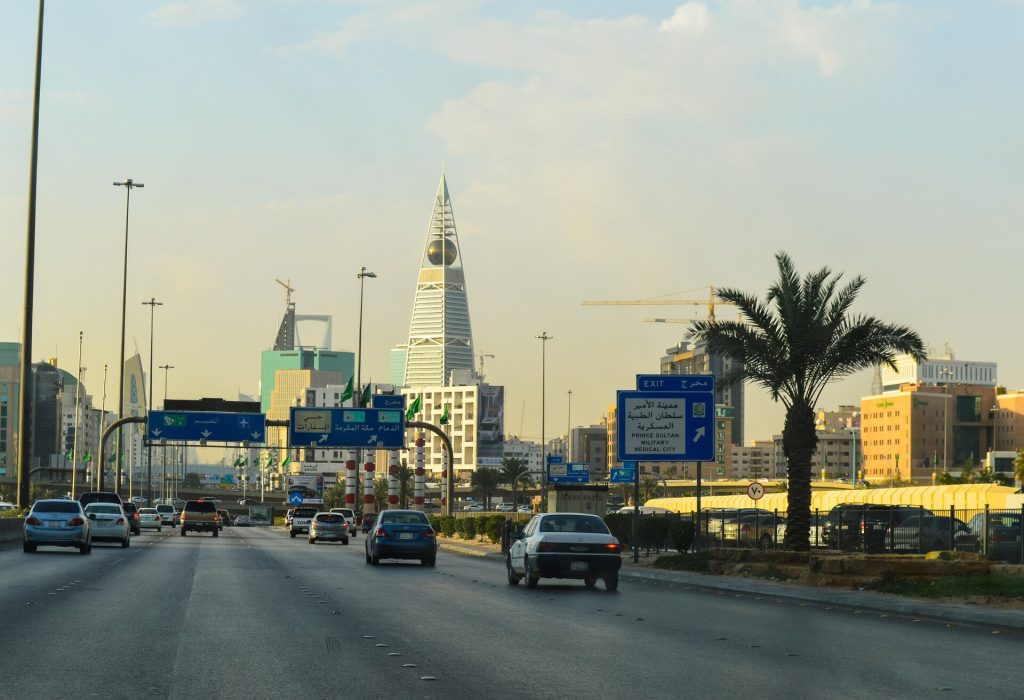
A city’s hotels are built on land, but they are filled from the air. Riyadh learned the difference in October.
October and November are normally the Saudi capital’s peak months for hotels. On Oct. 10, an attack on King Khalid International Airport, which Saudi authorities said killed 13 people and injured more than 300, shut the city’s main gateway just as the season began. What followed, in the numbers that CoStar’s STR keeps, was one of the worst months Riyadh’s hotels have had all year.
Occupancy fell 34.7 percentage points year over year, to 34.3% from 69%, according to STR data reported by Skift on Nov. 19. Only March was lower this year, at 28.3%. Average daily rate dropped 29.9% to $190. Revenue per available room fell 65.1% to $65. “October and November are usually the peak season months for Riyadh, so the impact is much bigger,” said Kostas Nikolaidis, STR’s associate account director for the Middle East and Africa.
A note on sources: Skift’s full report is behind a paywall. The figures here come from the summary and key points Skift publishes on the article page, and from a CEO Economy report that restates them and adds reporting from the aviation site aeroTELEGRAPH.
The arithmetic of an empty month
RevPAR is occupancy times rate, and October hit both at once. At 34.3% occupancy and a $190 rate, RevPAR works out to about $65, which matches STR. Run the percentages backward and last October looked like roughly a $271 rate at 69% occupancy, or RevPAR of about $186. That is our arithmetic, rounded, not STR’s. It shows why the total fell so far: half the guests went missing, and the hotels that still had guests charged about 30% less to keep them.
What emptied October
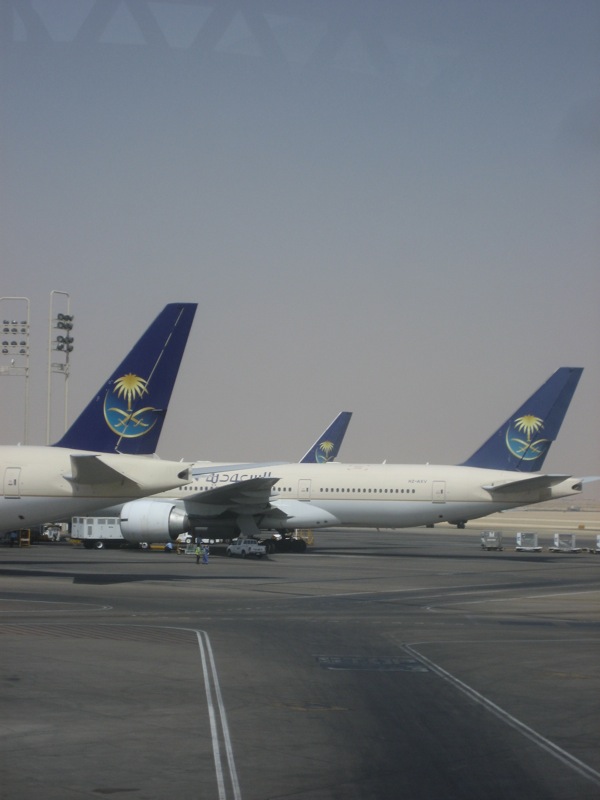
The airport is the story. Cirium data show 86% of scheduled Riyadh departures were canceled between Oct. 8 and late October, Skift reported. aeroTELEGRAPH reported at the time that several terminals were struck and a Saudia aircraft burned out on the apron, and it attributed a week of missile attacks on Saudi airports to Houthi rebels in Yemen, who are allied with Iran, according to CEO Economy. A notice to airmen kept the airport shut until at least Oct. 17.
Saudi carriers moved some flights to Al Qassim airport, about four and a half hours away by car, and bused passengers to the capital. Foreign airlines have been slower to come back. Etihad and IndiGo have suspended service through Nov. 30, British Airways through Jan. 11, 2027, and Cathay Pacific through Jan. 31, 2027, Skift reported. KLM has canceled all flights to Riyadh and Dammam through Dec. 27, aeroTELEGRAPH reported on Nov. 13. Delta has pushed its planned Atlanta–Riyadh route, originally due to open in October 2026, to March 2027.
The calendar that fills Riyadh’s hotels in the autumn has thinned with the flights. Skift reported that the events calendar has already lost the Saudi Grand Prix, the Future Investment Initiative and the Red Sea International Film Festival. The attacks have not stopped: a Houthi missile or debris struck the Public Investment Fund tower, the second landmark hit in Riyadh’s financial district in two weeks, and on Nov. 20 Skift reported that the Houthis had warned airlines to stay out of Saudi airspace.
Dubai, for comparison
Dubai, a short flight away, bent but did not break. Its October occupancy was 68.4%, down 16.5 points, and RevPAR fell 42% to $124, still nearly double Riyadh’s, according to the STR data Skift cited. Inside Dubai, luxury hotels held their rates but lost the most occupancy, while upper-midscale and midscale hotels cut prices hardest to stay full. Two markets in the same region, hit by the same war, landed in very different places. One still had its airlift. The other, for most of a month, did not.
Diriyah: a canceled hotel and an open question
A day after the STR numbers, Skift reported that Diriyah Company, the sovereign fund-backed developer building a giga-project on the edge of Riyadh, had canceled a SAR 717 million ($191 million) contract to build the 325-room One Hotel, nine months after awarding it. The contract went in February to a joint venture of BEC Arabia Contracting and the Saudi subsidiary of India’s Ashoka Buildcon, which holds 49%. In a Nov. 19 filing to the Bombay Stock Exchange, Ashoka said Diriyah told it the project was “cancelled due to internal reasons attributable to the employer,” with no further detail, and that it is approaching Diriyah to understand the reasons.
Whether the cancellation has anything to do with the attacks is not known. Skift said it isn’t clear whether the decision is linked to them, and we have not confirmed any link. What is on the record: Diriyah has awarded more than SAR 110 billion ($29.3 billion) in contracts to date, recently secured $640 million for hospitality projects in Wadi Safar, and has one hotel open, Bab Samhan. Nationally, Saudi Arabia’s hotel pipeline stands at a record 401 projects and 109,320 rooms, according to Skift, while giga-project contract awards have fallen to $10.6 billion so far this year from $13.6 billion in 2025, according to MEED. For our earlier look at that pipeline, see Saudi Hotel Pipeline Up 13% in Q2 as Giga-Project Awards Plunge.


Comments
No comments yet. Start the conversation.