+The Deep, Dark Truth: Hoteliers vs. Airbnb — The Battle for the Future of Hospitality
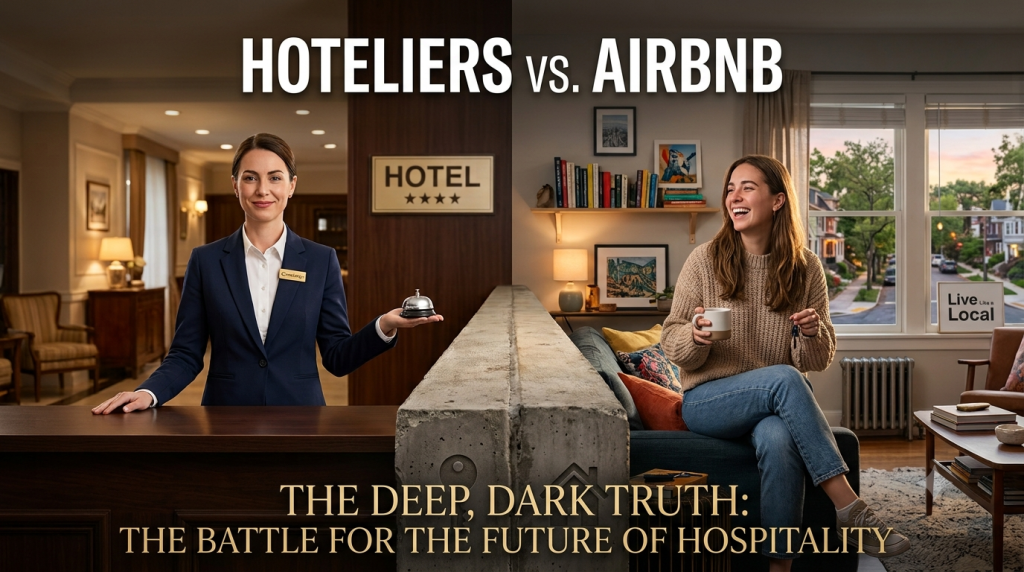
For years, the hospitality industry has been fighting a quiet war. It is not fought with armies or headlines. It is fought through booking platforms, guest reviews, loyalty programs, and the eternal question every traveler asks:Do I want a hotel, or do I want to feel like I’m living somewhere else?
On one side are hoteliers — the traditional guardians of hospitality, trained in the art of service, consistency, and creating experiences at scale. On the other side is Airbnb, the disruptor that promised travelers something hotels struggled to sell: authenticity, space, and the feeling of belonging.
The deep, dark truth? The battle was never really about rooms. It was about what people believe hospitality should be.
The Hotel Industry’s Original Promise
Hotels were built around a simple idea: take care of people when they are away from home.
A good hotel was never just four walls and a bed. It was the person at the front desk who remembered your name, the housekeeper who noticed you needed extra towels before you asked, the concierge who somehow found a dinner reservation when every restaurant said “no.”
Hotels mastered something Airbnb initially could not: human orchestration.
Behind every seamless stay is a complicated machine — operations, maintenance, safety standards, trained employees, security, compliance, and thousands of invisible details guests rarely notice unless something goes wrong.
Hotels are essentially controlled chaos wearing a pressed suit.
Airbnb’s Great Disruption
Then came Airbnb.
Suddenly, travelers could sleep in a Parisian apartment, rent a beach house, or stay in a neighborhood instead of a tourist district. It challenged the idea that hospitality needed a lobby, a bell desk, and a uniform.
Airbnb didn’t just sell accommodation. It sold a story.
It told travelers: “Don’t visit a place. Live there.”
And that message was powerful.
The platform tapped into a growing desire for personalization. Travelers wanted kitchens instead of minibars, neighborhoods instead of business districts, and experiences instead of predictable stays.
For many people, hotels started to feel like airports: efficient, familiar, and sometimes emotionally distant.
But Here Is Where the Story Gets Complicated
The romantic idea of Airbnb began meeting the reality of running a hospitality business.

Comments
No comments yet. Start the conversation.