The Million-Dollar Key Is Back. Most Hotel Owners Aren’t Invited.
U.S. hotel deals are up 37% this year, and a dozen hotels sold for more than $1 million a room last quarter. The money is real. It is also going almost entirely to the top of the market.
A year ago, four U.S. hotels sold for more than $1 million per key in the third quarter. This year, 12 did.
That is one of the headline numbers in JLL’s third-quarter U.S. hotel investment update, shared with Hotel Dive on Thursday. Through September, U.S. hotel investment reached $22.2 billion, up 37% from a year earlier. The number of deals rose 58% to 928, and single-asset sales were up 50% to $20.4 billion.
“Fundamentals have dramatically exceeded expectations,” Dan Peek, president of the Americas for JLL Hotels & Hospitality Group, told Hotel Dive. Kevin Davis, the group’s Americas CEO, said the market is in the middle of a new cycle “defined by a higher rate environment.”
Where the money went
Resorts were the story. They made up about 30% of single-asset deal volume this year, up from 18% in 2025, according to JLL. Metro and suburban hotels took 31%, and urban hotels 23%.
The busiest markets were Orlando, with $2.3 billion across 17 sales; New York City, with $1.5 billion across 20; and Naples, Fla., with $939 million across just five. The biggest single deal JLL cited was Trinity Investments’ $1.38 billion sale of Grande Lakes Orlando, home to a Ritz-Carlton and a JW Marriott.
CoStar’s weekly deal roundup, published Nov. 17, shows how high prices have gone at the top. Among recent closings:
- Four Seasons Scottsdale: 210 rooms, $372 million, about $1.77 million per room. Sixth Street and Riller bought it from Braemar (closed Oct. 29).
- 1 Hotel Brooklyn Bridge: 195 rooms, $202 million, about $1.04 million per room. Host Hotels & Resorts bought it from Starwood Capital (Nov. 4).
- The Ritz-Carlton, Laguna Niguel: 373 rooms, $378 million, about $1.01 million per room. KSL Capital Partners bought it from Strategic Hotels & Resorts (Oct. 26).
- InterContinental Miami: 652 rooms, $300 million including debt, about $460,000 per room. Gencom, White Bridge Capital and Atalum Hospitality bought it from Strategic (Oct. 30).
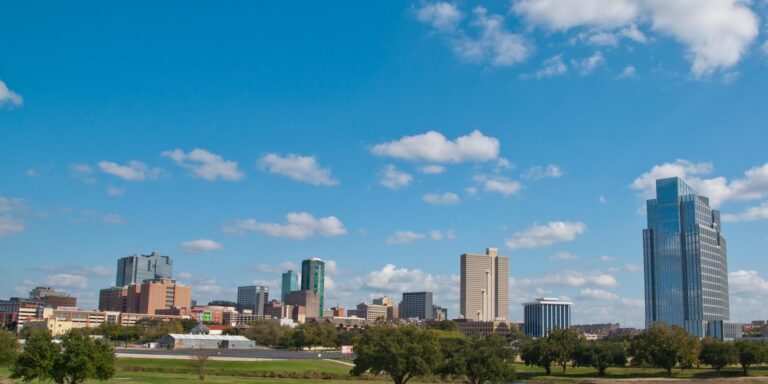
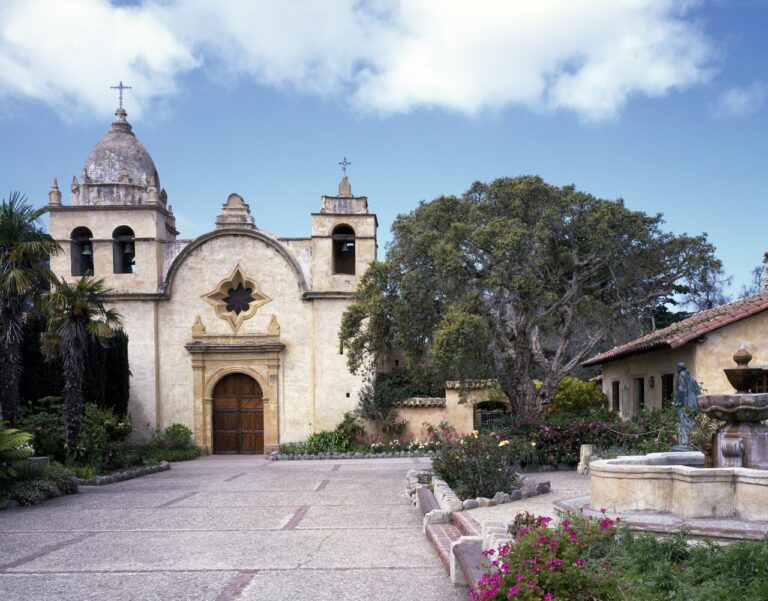
We covered two more of this fall’s trades in detail: DiamondRock’s $444,000-a-key Carmel Mission Inn purchase and DFW Airport’s $194 million buy of the Hyatt Regency DFW.
Who is buying
The buyer list has changed. Private equity and high-net-worth individuals made up 42% of volume this year, JLL said: private equity 24% and wealthy individuals 18%.
That second number is the one to notice. Wealthy individuals are now about 16% to 18% of the hotel buyer pool, according to JLL, compared with about 1% roughly a decade ago. REITs are also “considerably more active” this year. Deals over $500 million were 15% of volume.
JLL’s numbers on performance help explain the appetite. U.S. RevPAR was up 5.6% through September, with luxury up 9.4% and upper midscale up 4.5%. Davis said luxury should stay strong because there is no new supply coming.
The part of the market that isn’t moving
Here is the catch for most of our readers. JLL describes mid-sized deals as “subdued.” The surge is at the top: big resorts, luxury hotels and large portfolios. The select-service and limited-service hotels most owners and brokers trade every day are not seeing the same rush.
Peek also said some owners are choosing to refinance rather than sell, and that “there is a refinance solution for our space.” That keeps some hotels off the market that might otherwise trade, which is part of why mid-sized volume looks thin.
What it means for you
- If you own a luxury or resort asset, this is the strongest buyer pool in years. Wealthy individuals and private equity are bidding, and a dozen sales cleared $1 million a key in one quarter.
- If you own select-service, don’t price off the headlines. The $22.2 billion figure is weighted toward big trophy deals. Your buyer is still underwriting today’s interest rates.
- If you’re a broker, the new buyer to know is the high-net-worth individual. Eighteen percent of volume is a lot of people who weren’t in this market ten years ago.
The Bottom Line
The hotel deal market is back, but it is two markets. At the top, the number of sales above $1 million a key tripled in a year. In the middle, where most American hotels sit, JLL’s own word is “subdued.” Know which market your hotel is in before you set a price.
Sources: Hotel Dive, “US hotel investment reached $22.2B in Q3 fueled by larger deals, urban recovery: JLL” (Nov. 19, 2026); CoStar, “US hotel deals: InterContinental Miami sells for $300 million” (Nov. 17, 2026). Per-room prices are CoStar’s figures.
Comments
No comments yet. Start the conversation.