+A Year After $290.7 Million, Ascendant Is Taking $58 Million Back Out of The Woodlands
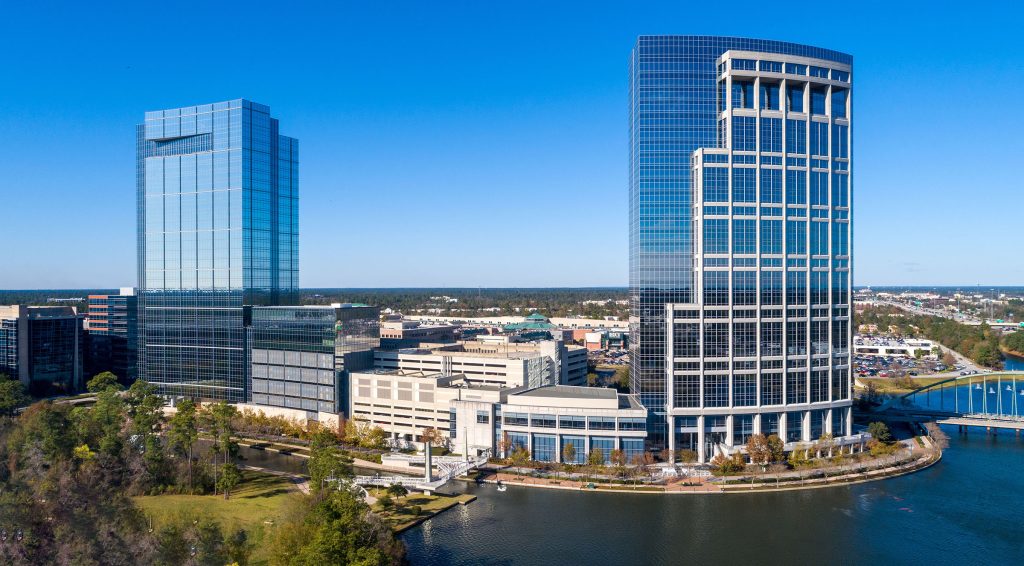
A rating agency has put numbers on a $255 million loan against three Texas hotels that Ascendant Capital Partners bought a year ago. The numbers say a great deal about what lenders will pay for right now, and what an owner has to bring to the table.
A year is a short time to own a hotel and a long time to owe money on one, and Ascendant Capital Partners has lately found the exact length of it. In December 2025 the Los Angeles firm paid $290.7 million for three hotels in The Woodlands, the master-planned community north of Houston, which Fitch Ratings counts at $319,759 a key. Now the year is nearly out, and the debt market has put a plain question to those same hotels: what are you worth to a lender today? The answer, set down in a Fitch presale report dated Nov. 20 and reported by the trade press on Nov. 24, is $255 million.
The loan is not closed. A presale is a rating agency’s preview of a deal, and what follows rests on that preview and the trade coverage of it. According to Fitch, the trust will hold a two-year, floating-rate, interest-only mortgage with three one-year extension options, originated by JPMorgan Chase Bank, and the transaction is expected to close on or about Dec. 15. Commercial Property Executive reported that the rate is 2.8 percentage points over SOFR, and Connect CRE and CRE Market Beat carried the same terms.
The loan would do four things, Fitch says, and they add up to the loan amount, which is how we know nothing has been left out:
- Refinance $182.0 million of existing debt.
- Fund an approximately $10.0 million property improvement plan (PIP) reserve.
- Return approximately $58.0 million of equity to the sponsor.
- Pay approximately $5.0 million in estimated closing costs.

The hotels are the 402-key Woodlands Resort, Curio Collection by Hilton (44.2% of the keys), the 302-key Westin at The Woodlands (33.2%) and the 205-key Embassy Suites by Hilton at the Woodlands (22.6%), 909 keys in all. HEI Hotels & Resorts manages them. Fitch says so, and HEI said in January that the three hotels were its first management partnership with Ascendant. That is the same HEI that is slated to take over the Westin Seattle if the reported Ascendant purchase goes through, a story we followed on Nov. 22. Fitch’s own heading for the sponsor section reads “Experienced Sponsorship and Management.” The agency describes a Los Angeles platform, founded in 2019, that has acquired or invested in more than 60 hotels and now holds 32 assets producing more than $850 million in annual revenue.
The Arithmetic of a Good Year
Start with what the lender is willing to do. Fitch puts the $255 million loan at $280,528 a key. Against the $290.7 million Ascendant paid, that is about 88 cents on the dollar, by our math. The equity coming back out, $58 million, is about a fifth of the purchase price. Fitch does not say how much equity Ascendant put in last December, so no one outside the deal can say what share of its check is being returned.
Then look at what the agency itself believes. Fitch’s stressed net cash flow for the portfolio is $28.8 million. That is 14.4% below the issuer’s $33.6 million and 13.1% below the $33.1 million the hotels earned over the 12 months through October 2026. Fitch applied a 10.75% cap rate to reach a value of $267.8 million, which is about 8% below the price paid, by our math. On that value it puts the loan at 95.0% loan-to-value, an 11.3% debt yield and a stressed debt service coverage ratio of 1.08. One of Fitch’s key rating drivers carries a plain label: “High Fitch Leverage.” Keep in mind that Fitch’s value is a rating agency’s stress case, built to be cautious, and it is not an appraisal or a market price.
What the Market Is Offering Right Now
By the numbers, the window is open. The CRE Finance Council (CREFC) reported on Nov. 16 that single-asset, single-borrower issuance had reached $91.9 billion for 2026, already above the $91.1 billion of all of 2025, the prior annual high. Floating-rate SASB loan spreads have averaged S+220 so far this year, 14 basis points tighter than in 2025.
Two recent hotel deals show where this one sits. In early October, Quadrum Global refinanced six Arlo hotels with a $500 million loan; Morningstar DBRS reported a spread of about 2.76 percentage points over SOFR, about $166.8 million of equity returned to the sponsor, a DBRS loan-to-value of 77.2% and an appraised loan-to-value of 57.5%. On Nov. 6, a $358 million floating-rate loan on four Braemar hotels priced at a 48.3% loan-to-value and an 18.7% debt yield, CREFC said, with its top class at S+200, which is 32 basis points wider than the three-month floating-rate average of S+168. By our read, investors are buying hotel paper and charging a little extra for it.
The Woodlands loan, at roughly S+280, is priced close to Arlo and carries more leverage. Fitch puts it at 95.0% loan-to-value against the 77.2% DBRS put on Arlo, though the two agencies use different stress values and the comparison is imperfect. The pattern is the useful part, and it is our read rather than a finding by either agency: for a large, flagged, well-located portfolio the money is there, and the more a borrower wants to take out, the more the spread, the reserves and the extension terms start to say.
Put a number on the cost. The New York Fed’s SOFR printed 3.92% on Nov. 23. Add 2.8 percentage points and the coupon sits near 6.7%, or about $17.1 million a year of interest on $255 million, by our math, before any rate cap or fees. A floating-rate loan lives or dies on the cap: the Arlo borrower was expected to buy one with a 7.25% strike, according to DBRS, while the terms of any cap on the Woodlands loan were not in the Fitch excerpt we read. And the Fed decides Dec. 9; when our rates and lending page was last updated, markets were pricing a quarter-point hike. Closing is expected six days after that decision.

Now look at the other side of the same market. Trepp counted $1.16 billion of hospitality CMBS reaching hard maturity in November, and found that 79.31% of it has a debt yield below 6%, as we reported in our Nov. 16 story. Trepp estimated that a loan needs a debt yield of roughly 8.7% to 10.9% to refinance at its current balance. Fitch’s 11.3% for The Woodlands clears the top of that range, though Trepp and Fitch measure cash flow differently. That same day we covered the Crowne Plaza Times Square refinancing, where a $235 million Fortress loan replaced a $270 million one, or $35 million less debt. One November, two answers: $58 million out in Texas, and a smaller loan in Manhattan. Each is the debt market telling an owner what a hotel can carry.
What a Cash-Out a Year After Purchase Signals
Here is what is known: the sponsor held the hotels for about 12 months, and the new loan returns $58 million to it while funding a $10 million renovation reserve. What follows is our read, and it is opinion, not fact.
First, the market the hotels sit in. Commercial Property Executive says Ascendant’s hotels make up roughly 40% of the hotel inventory at The Woodlands, a community where land-use restrictions limit hospitality supply and the corporate base includes the ExxonMobil campus. Houston First’s August data, as summarized on our Houston market page, showed North/Woodlands RevPAR up about 7%. Lenders pay for scarcity and for cash flow they can see. This portfolio has both.
Second, the structure. A two-year initial term with three one-year extensions can run as long as five years. CRE Market Beat wrote that it “suggests flexibility around future capital planning and potential exit timing for Ascendant.” We would put it more plainly: the loan lets the sponsor take money off the table now and keep every option on the hotels later, whether that is to hold, to renovate, or to sell.
Third, the work other people did. Fitch says the prior ownership, a Lowe and Pimco partnership according to CPE, invested roughly $26.9 million ($29,611 a key) between 2021 and 2024, including the conversion of The Woodlands Resort to Curio Collection, and it lists that spending among its key rating drivers under “Recent Capital Improvements.” It is reasonable to read the new loan as the debt market giving credit for renovation spending that has had time to show up in trailing cash flow. Ascendant is now committing about $10 million more ($10,981 a key), funded at closing from the loan itself.


Comments
No comments yet. Start the conversation.