Optimism Ruled the Room at Dallas’s 20th Hotel Conference, Foley’s Cliff Risman Says
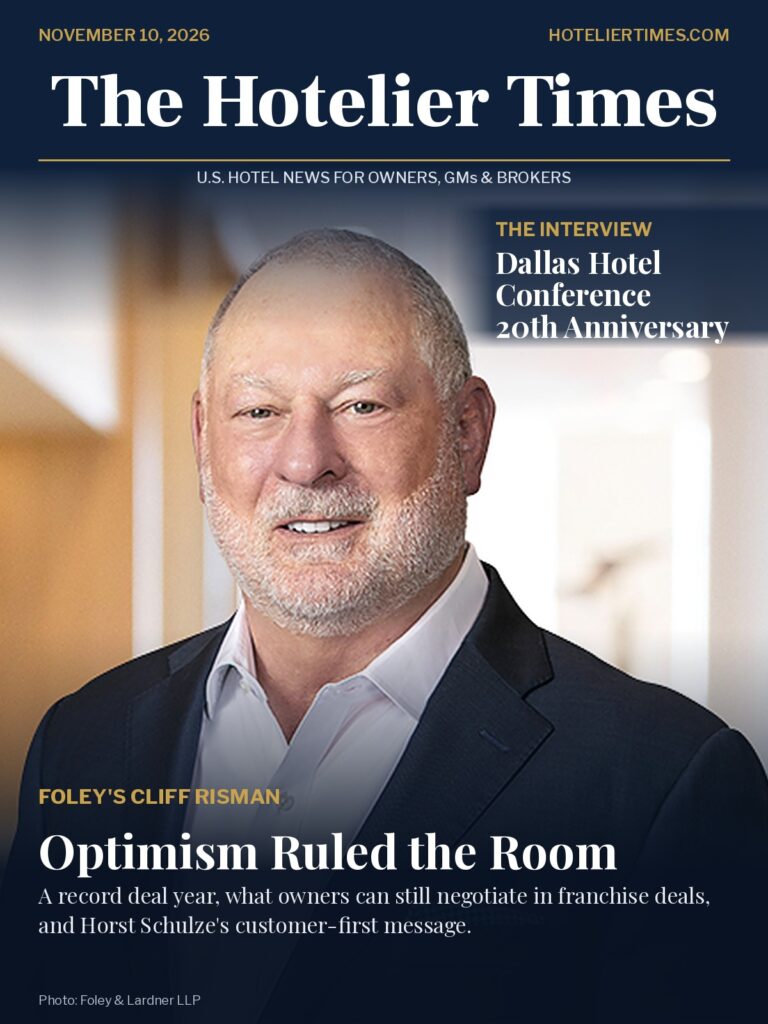
“I think the biggest risk is the quality of your counterparty, because it almost doesn’t matter what the document says. It’s about the integrity of the person on the other side of the deal who sold it to you.”
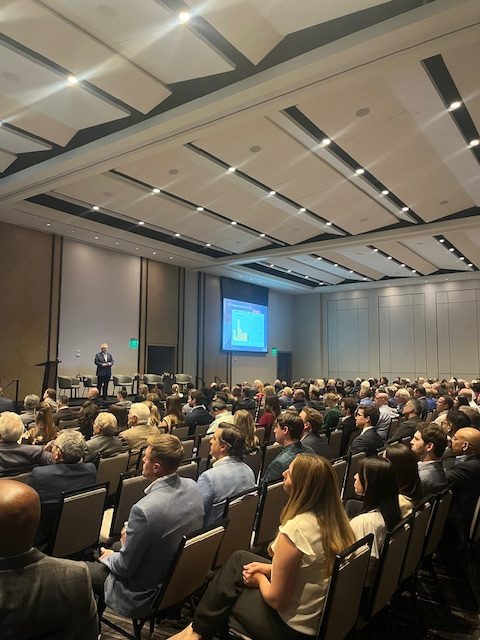
That unexpected answer came from Clifford J. Risman, partner and co-chair of Foley & Lardner’s Hospitality & Leisure Industry Team, in an on-the-record interview with The Hotelier Times on Monday about the Nov. 5 Dallas Hotel Conference. The mood at Foley’s 20th anniversary gathering at the Marriott Dallas Uptown was not cautious. It was upbeat. Foley had anticipated more than 450 attendees for a program that ran from 3:00 to 5:15 p.m., with a reception after — a market update, a legislative briefing, a leaders panel, the Dallas–Fort Worth 2026 Hotel Transaction-of-the-Year Award, and a fireside chat Risman moderated with hospitality legend Horst Schulze.
Risman’s takeaway from the room: significant optimism. His Foley hospitality team, he said, is also having its busiest year on record. Below, an edited conversation for hotel owners, general managers and brokers.
Q&A with Cliff Risman
The Hotelier Times: What was the biggest takeaway from the 2026 Dallas Hotel Conference for owners?
Cliff Risman: Significant optimism. There are headwinds, but frankly, when you look at the numbers that were presented by the various panelists, the industry is faring quite well despite uncertainty. It was very optimistic.
HT: Are hotel deals picking up, or are buyers and sellers still far apart on price?
Risman: I can only gauge it by what our clients are doing — and we’re having our busiest year ever. Some of that is buying, selling, financing; others are brand changes, management contracts. But in terms of transaction volume for our team, 2026 will be a record year.
HT: Tell us about you and the Foley hospitality team.
Risman: I co-chair the Foley hospitality industry team — 60 to 65 lawyers across our 27 offices in the hospitality space, about 15 of them almost solely hospitality. Our goal was a one-stop shop: transactions plus IP, labor, tax and other niches that understand hotels. I started as a traditional real estate lawyer. Around 1989 or 1990 I helped a client sell the Hotel Bel-Air in Los Angeles and the Hotel Hana-Maui in Hawaii. Next deal: “Call Cliff. He’s the hotel guy.” I headed the hotel practice at Gardere before we merged into Foley about eight years ago. Along with Bill Guthrie in Orlando, we co-lead Foley’s hotel practice.
HT: Are you seeing more distressed hotels, foreclosures or loan workouts?
Risman: Surprisingly, the short answer is no. For decades, every time rates rise or something like COVID hits, everyone forecasts that the fire hose will open. And yet they ebb and flow. In COVID, parties largely worked with each other. There were some — we represented the receiver on a portfolio of, I want to say, 48 hotels in 14 states, about a billion dollars of debt that was sold. But there hasn’t been the forecasted spike. There’s a lot of debt coming due. We’ll see what the Fed does. To date, it has not spiked the way some prognosticators thought.
HT: What are lenders asking for now that they weren’t a year ago?
Risman: There’s a lot of capital for debt and equity when deals make sense. It’s hard to build new — construction costs, interest rates — especially when you can buy and renovate for less than replacement cost. Lenders are more than ever focused on sponsorship. Who’s the developer? What’s their track record? Have they done this before? Or are they a high-net-worth individual with a big ego who thinks it’d be fun to build or buy a hotel?
HT: In franchise agreements, where do owners still have room to negotiate?
Risman: Franchise is probably the least negotiable piece of what hotel owners do. Management agreements and loan terms are more negotiable. With a major franchisor, you pick your spots. The specified fee model is really not negotiable, though a ramp-up into that fee structure over the first one, two or three years as you stabilize is. On an existing asset being renovated, the PIP is absolutely negotiable — what has to be done and by when. Exit terms are tougher and depend on leverage.
The most negotiable items are the fee ramp-up, what the PIP looks like, and territorial protection — making sure they can’t build a competing hotel around the corner. That may be a radius, a city or a county, and for how long.
This is the hospitality business. And when customers feel as though you’re providing great hospitality, you generate customers for life, who come back, and who spend more money at your asset.
Cliff Risman, paraphrasing Horst Schulze
HT: Which brand or management-contract terms do owners most often regret?
Risman: I’m uncomfortable naming names. The biggest brands — Marriott, Hilton, Hyatt, InterContinental — trade tough, but they bring system and distribution, which is what the owner is buying. At midscale and upscale, some brands are not that distinguishable; loyalty and distribution — putting heads in the beds — matter most. Smaller, newer brands may be more flexible on terms, but sometimes ownership isn’t getting that distribution, and then they often regret that.
HT: What legal risks are owners underestimating?
Risman: Labor, wage claims, hotel-tax liability in a sale — those are real, and sophisticated counsel handles them with holdbacks and indemnities. The answer you may not expect: the biggest risk is the quality of your counterparty. It almost doesn’t matter what the document says. It’s about the integrity of the person on the other side. Have they been honest? Do they stand behind their liabilities, or do they get their cash and disappear?
HT: How is Texas different heading into 2027?
Risman: Our development pipeline has been stronger than a lot of other areas — driven by the Texas economy and the influx of residents and businesses relocating here, from California, New York and elsewhere. It’s not only sales of existing assets. The development pipeline here is the strongest around the country too, I believe.
HT: One piece of advice for an owner thinking about selling in the next 12 months?
Risman: Pick the right broker — a sophisticated one with significant experience selling hotels of your type, not a real estate broker who just learned how to spell hotel. And when you look at offers, look at the sponsorship of the buyer, not just the number. Someone may offer more and still not perform or raise capital. Who represents you, and which buyer you pick, are both critical.
HT: Anything else about the conference you want on the record?
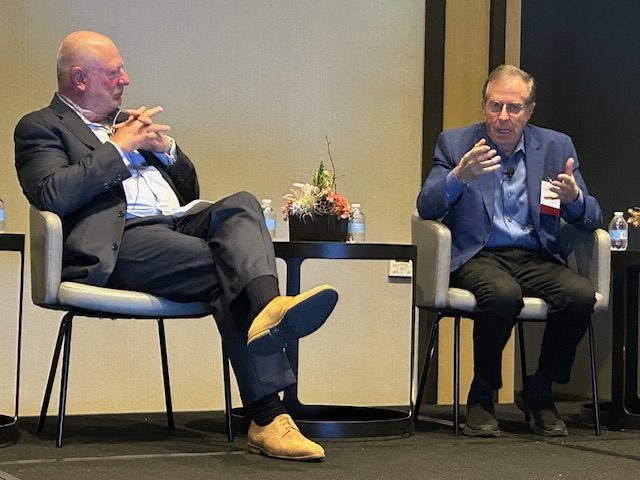
Risman: It was very well attended. One of the most interesting pieces was a fireside chat with Horst Schulze. He co-founded Ritz-Carlton, won multiple Malcolm Baldrige quality awards, and founded Capella Hotels, currently the number-one-ranked luxury hotel company in the world. He’s an industry icon, especially on empowering employees — “ladies and gentlemen serving ladies and gentlemen,” the Ritz-Carlton Credo. Students and younger folks in the room were fascinated.
HT: What were his views?
Risman: Horst believes it’s about three things: the customer, the customer, and the customer — satisfaction, employee morale, staff empowered to resolve complaints, cleanliness, service. Sometimes people talk only about numbers and occupancy and costs, and forget this is the hospitality business. When customers feel you’re providing great hospitality, you generate customers for life who come back and spend more. He was all over that.
What owners should take away
- Optimism without a distress spike. Risman said the Dallas conference left owners with significant optimism, the industry is faring quite well despite headwinds, and — surprisingly — he is not seeing a spike in foreclosures or loan workouts, even with a lot of debt coming due.
- Lenders are underwriting the sponsor. Capital is available when deals make sense, but lenders are more focused than ever on who the developer is, their track record and reputation — not just the asset.
- In franchise deals, pick your spots. The fee model itself is rarely negotiable, but owners can still work a fee ramp-up in the first years, the PIP scope and timing, and territorial protection.
- People over the paper. When selling, choose a sophisticated hotel broker and judge buyers by sponsorship, not only price. And on any deal, Risman’s top legal risk is counterparty quality and integrity — whether the other side stands behind the liabilities.
Clifford J. Risman is a partner in Foley & Lardner’s Dallas office and co-chair of the firm’s Hospitality & Leisure Industry Team. This interview was conducted on the record on Nov. 9, 2026, and has been lightly edited for clarity. The 2026 Dallas Hotel Conference was held Nov. 5 at the Marriott Dallas Uptown.



Comments
No comments yet. Start the conversation.