Fed Decision Oct. 28: What Hotel Owners Should Watch
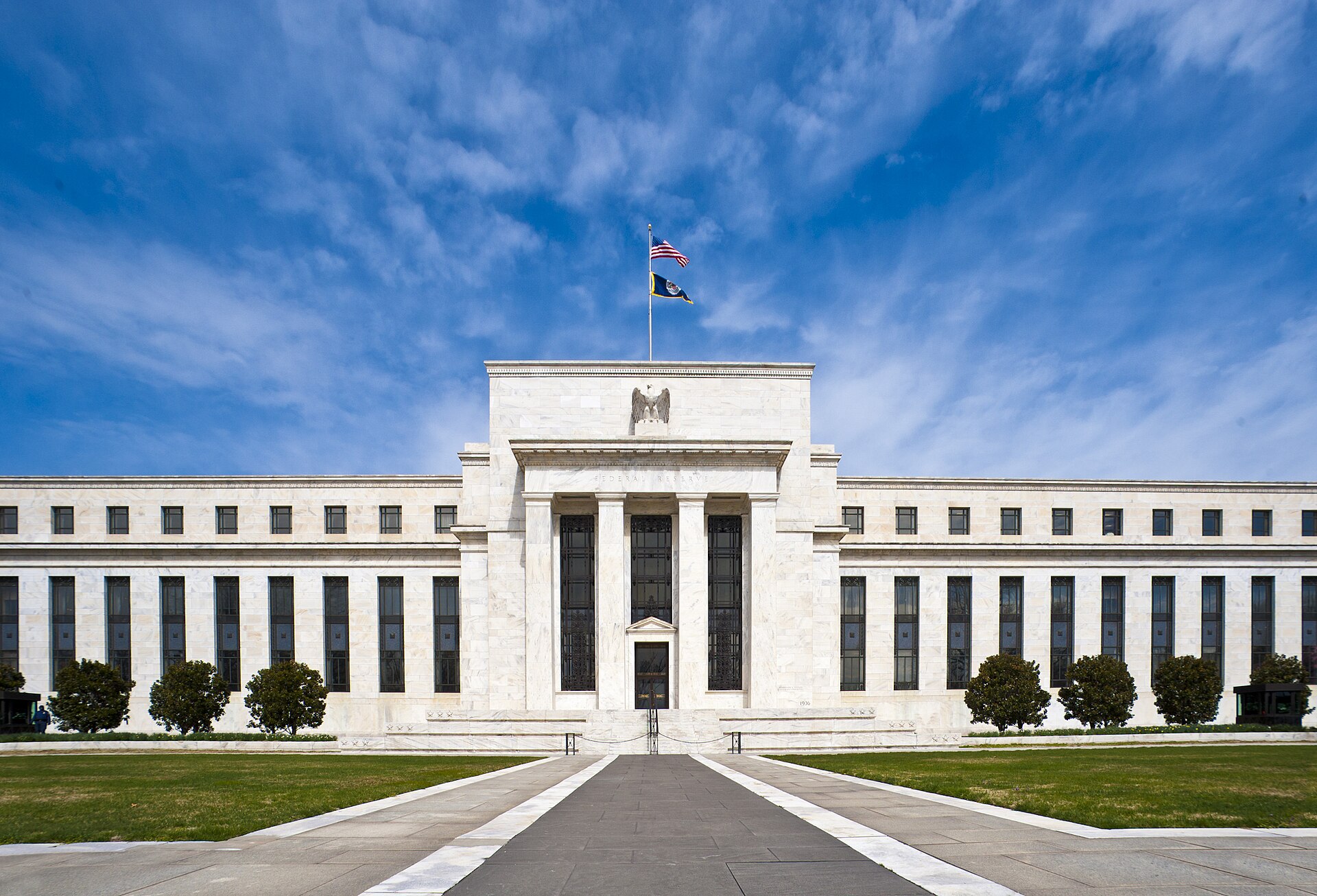
For hotel owners, GMs, lenders and brokers. Prepared Tuesday evening, Oct. 27, 2026. The decision is Wednesday at 1:00 p.m. CT. Market pricing changes daily; figures below are dated and sourced.
The Federal Reserve announces its next interest-rate decision Wednesday, Oct. 28, at 2:00 p.m. ET (1:00 p.m. CT). Chair Kevin Warsh holds his press conference at 2:30 p.m. ET (1:30 p.m. CT), according to the Fed’s October calendar. This is not a projections meeting: the Fed’s meeting calendar marks only the December 8–9 meeting for a new Summary of Economic Projections, so there is no new “dot plot” on Wednesday.
For hotels, the decision itself may matter less than what it does to the 10-year Treasury yield, to floating-rate loan costs and to the bid-ask gap that has been holding back deals. Here is where things stand going into Wednesday, the three ways the decision can go, and what each path could mean for your debt, your value and your next move.
Where rates stand going into Wednesday
- The policy rate: 3.75% to 4.00%. On Sept. 16, the Federal Open Market Committee voted 12 to 0 to raise the target range by a quarter point, and its statement said “Inflation remains elevated.” The effective federal funds rate was 3.88% on Oct. 26 (Federal Reserve data via FRED).
- What the market expects: As of Tuesday evening, Oct. 27, CME FedWatch pricing from 30-day Fed Funds futures implied about a 92% chance of a hold at 3.75% to 4.00% and an 8% chance of a quarter-point hike, with no cut priced. Afternoon readings were near 90.6% hold / 9.4% hike (Bloomingbit citing CME FedWatch); Kiplinger’s live feed showed the hold moving between about 88% and 93% during the day (Kiplinger). For December, CME FedWatch pricing put roughly four-fifths odds on a higher rate by the Dec. 8–9 meeting. Check the live CME FedWatch tool Wednesday morning; odds move by the hour.
- What economists expect: In the CNBC Fed Survey published Oct. 27, 93% of respondents expect a pause this week and 76% expect a December hike. About 30% said the Fed should hike now, and respondents expect at least two voters to dissent from a hold. In a Reuters poll taken Oct. 16–20, 94 of 100 economists expected a hold this week and all 100 expected a hike in December (Reuters via Investing.com).
- Inflation: The consumer price index rose 0.6% in September and 3.7% over 12 months, up from 3.4% in August. Core CPI rose 2.6% over the year. Gasoline jumped 9.1% in the month. The “lodging away from home” index rose 2.0% in September after a 2.4% gain in August (Bureau of Labor Statistics, Oct. 14).
- Jobs: Employers added 29,000 jobs in September and unemployment was 4.2%. July and August were revised down by a combined 60,000. Average hourly earnings were up 3.0% from a year earlier, and leisure and hospitality employment showed little change (BLS, Oct. 2).
- The 10-year Treasury: hovering at 5% — 4.99% on Tuesday, Oct. 27, after 5.00% on Monday and on Oct. 23, according to the U.S. Treasury’s daily par yield curve. The 2-year was 4.70% on Tuesday. Fixed-rate hotel loans are priced off this part of the curve. (October’s high close was 5.31% on Oct. 5.)
- SOFR: 3.93% on Oct. 26 (New York Fed), the base for most floating hotel loans.
- Hotel demand: For the week of Oct. 11–17, U.S. hotel occupancy was 70.7%, ADR was $177.65 and RevPAR was $125.53, up 5.5% from a year earlier, CoStar reported. On Tuesday, Hilton reported Q3 system-wide comparable RevPAR up 5.8% (U.S. +7.0%), raised full-year RevPAR guidance to 4.0%–4.5%, and guided Q4 to 3.0%–3.5%, citing midterm elections and the Middle East. Interest expense rose to $184 million from $159 million a year earlier (Hilton IR, Oct. 27). That is brand-level demand and corporate debt, not owner CMBS stress — keep Trepp’s lodging numbers for that.
One more date on the calendar: the midterm elections are Tuesday, Nov. 3, six days after the decision. The Fed sets policy independently, and former Cleveland Fed President Loretta Mester told AFP that political timing would not be a factor in the room (AFP via Yahoo Finance). For hotel owners, the practical point is that two big events land within a week, so expect markets to stay jumpy into mid-November.
The hotel debt picture the Fed is walking into
- Delinquency is rising. Trepp’s lodging CMBS delinquency rate rose 34 basis points to 6.18% in September, from 5.84% in August. Among the largest new delinquencies was a $280 million beachfront hotel loan in Santa Monica (Trepp, Oct. 2). Trepp’s October monthly report was not out as of Tuesday evening.
- More loans are in special servicing. The lodging special servicing rate rose 21 basis points to 8.95% in September. The rate for all property types was 11.49%, the highest since February 2013 (Trepp, Oct. 13).
- The maturity wall. According to Trepp data cited by Largo Capital, 596 hotel CMBS loans totaling $18.7 billion mature in 2026, and about 70% of that is floating-rate (Largo Capital, Oct. 13). We covered the same figures in our look at the 2026 hotel loan maturity wall.
- Limited-service is the weak spot. Of the $92.18 billion securitized lodging book, limited-service hotels carry a 10.34% nonperforming rate, versus 5.86% for full-service and 3.89% for extended stay. Limited-service is also the only segment whose hard maturities through 2028 ($5.43 billion) are larger than its stated maturities ($5.16 billion). And 31.1% of that $5.43 billion sits below an 8.0% debt yield, a level Trepp says many lenders use as a refinancing threshold (Trepp, Sept. 28).
- Cap rates (survey). Newmark’s Mid-Year 2026 Valuation & Advisory survey put going-in caps at 6.25% for luxury Class A and 9.50% for limited-service Class B and airport/highway Class B (Newmark V&A Mid-Year Update 2026). That is an appraiser survey based on sales and participant discussions, not a closed-deal average. HVS’s Fall 2026 broker survey says “the general sentiment is that cap rates are set to increase” on higher rates (HVS, Oct. 20).
- Securitized lending spreads (all property types). The latest fixed-rate single-asset CMBS Class A print was 100 basis points over Treasuries on Oct. 7, and the latest floating-rate print was 175 basis points over SOFR, according to the CRE Finance Council’s Oct. 20 update. A confirmed hotel example: Morningstar DBRS finalized ratings on SWVP Trust 2026-GRAND, a $270 million floating-rate loan on the Grand Hyatt Nashville at one-month SOFR plus a 2.185% weighted-average spread (Morningstar DBRS, Aug. 18). These figures are deal-specific; they are not a market-wide hotel coupon survey.
Scenario 1: The Fed holds (the market’s base case)
Analysis. A hold is already priced in, so the market will react to the statement’s wording, the vote and Chair Warsh’s comments about December. A hold that keeps a December hike on the table extends today’s conditions; a hold that sounds patient could pull yields down. Watch for dissents: the CNBC survey expects at least two.
- Hotel loan rates: Floating-rate loans track SOFR (3.93% on Oct. 26), so a hold leaves floating-rate interest bills roughly where they are. Fixed-rate quotes will follow the 10-year, which is hovering at 5% and is driven by inflation data and the December outlook as much as by Wednesday.
- Refinancing and CMBS maturities: Analysis. No relief, and no new shock. Owners with 2026 and 2027 maturities keep negotiating extensions. Where debt yields are below lender thresholds, a lower coupon would not fix the loan size anyway, so expect paydowns, new equity or rescue capital.
- Cap rates and values: With Newmark already showing a wide spread between luxury Class A (6.25%) and limited-service Class B (9.50%), analysis: a hold keeps that gap in place and keeps HVS’s expected upward drift in caps on the table.
- Transaction volume: HVS says “Rising Treasury yields and inflation concerns have reopened the gap between buyers and sellers,” as quoted by Largo Capital. Analysis: expect steady trophy and resort interest and selective select-service buying, with thin liquidity for economy hotels. For a recent example of how deals are getting done, see the Thompson San Antonio sale, where the foreclosing lenders financed 78% of the price, and our Q3 2026 hotel deal recap.
- Construction financing: Construction loans are usually floating-rate and priced off SOFR, so a hold leaves costs where they are. At midyear, 1,081 U.S. hotel projects with 133,216 rooms were under construction, and conversions hit a record 1,567 projects in the pipeline (Lodging Econometrics, Q2 2026). Analysis: conversions, which need less construction debt, stay the favored route. See our Texas hotel pipeline report for local examples.
- The dollar, inbound travel and foreign capital: The dollar index hit an 18-month high in mid-October before easing to 102.00 on Oct. 15, CNBC reported. Analysis: a hold that keeps a December hike likely keeps the dollar firm, which makes U.S. trips and U.S. hotels more expensive for foreign visitors and buyers.
Scenario 2: A hawkish surprise (a hike, or a hold with a firm December signal)
Markets priced about an 8%–10% chance of a hike this week. Some economists think the Fed should act now: Mizuho’s Alex Pelle told Reuters that not moving in October “is the wrong call from a policy point of view,” and Morgan Stanley’s Michael Gapen said the risks are toward a Fed that “ultimately needs to hike rates more than we expect” (Reuters). A hold with several dissents in favor of a hike, or a clear December signal from Chair Warsh, would land in much the same place. CNBC reported Tuesday that Warsh has preferred to let markets take their own signals from data rather than from forward guidance (CNBC).
- Hotel loan rates: Analysis. A hike would raise SOFR, and floating-rate interest bills with it, within days. If you have an interest-rate cap coming up for replacement, expect it to cost more. Fixed-rate quotes would rise if the 10-year moves back above 5%.
- Refinancing and CMBS maturities: Analysis. This is the scenario that turns tight refinancings into failed ones. With limited-service hard maturities already larger than stated maturities (Trepp), expect more transfers to special servicing and more discounted or lender-financed sales.
- Cap rates and values: Analysis. Cap rates would likely rise faster than the gradual increase HVS’s brokers expect, with the most pressure on hotels whose RevPAR is flat or falling — the same limited-service and airport Class B assets Newmark already prices near 9.50%.
- Transaction volume: Analysis. Leveraged buyers step back. All-cash buyers, private wealth, low-leverage REITs and well-capitalized foreign investors gain an edge.
- Construction financing: Analysis. Higher floating rates make ground-up starts harder to pencil, especially for projects that haven’t closed their construction loans yet. Expect more delays and more conversions.
- The dollar and international travel: Analysis. A stronger dollar would add another headwind to inbound travel, which is already soft. International visitors spent nearly $19.9 billion in the U.S. in August, down nearly 5% from a year earlier, according to the National Travel and Tourism Office (NTTO via IITA). International air arrivals fell 6.1% in the second quarter, with overseas arrivals down 8.0% (NTTO). Tourism Economics says overseas arrivals were down 5.8% year to date through August and Western European arrivals fell 8.8%, while Mexico and South America grew (Tourism Economics, Sept. 21). Hilton’s Q4 guide already flags a Middle East headwind.
Scenario 3: A rate cut (not priced by markets)
Futures priced essentially no chance of a cut this week, so treat this as a stress test, not a forecast.
- Hotel loan rates: Analysis. Floating-rate borrowers get the most direct relief, including bridge-financed select-service and transitional hotels. The 10-year could go either way: down on weaker growth, or up if markets worried that the Fed was easing with inflation at 3.7%.
- Refinancing and CMBS maturities: Analysis. A quarter point helps interest coverage but doesn’t change debt-yield math, so it would not rescue loans whose cash flow is too thin to support their balance.
- Cap rates and values: CBRE’s H1 2026 cap rate survey says the 10-year spiked in the first half and that uncertainty around interest rates could slow investment activity (CBRE, Aug. 12). Analysis: a single cut would probably not lower long-term rates enough by itself to change hotel pricing much.
- Transaction volume and construction: Analysis. Some buyers waiting for lower rates might come back, and floating-rate construction loans would get a little cheaper. But if a cut came in response to a shock, demand worries could offset the cheaper money.
- The dollar and foreign capital: Analysis. A surprise cut would probably weaken the dollar, making U.S. trips and hotel assets cheaper for foreign visitors and buyers.
Which segments and markets win or lose
Analysis, based on the sourced data above.
- Most exposed: limited-service and economy hotels with floating-rate or near-term maturing debt, given Trepp’s segment data and Newmark’s 9.50% Class B going-in caps; ground-up projects that still need construction loans; and hotels whose RevPAR is flat or falling.
- Better positioned: extended-stay, which has the lowest nonperforming rate in Trepp’s data (3.89%); low-leverage owners; and luxury and upper-upscale hotels, where Newmark’s Class A going-in cap is 6.25% and HVS says ADR has been “the star of the show” this year.
- Gateway and international markets: markets that rely on overseas visitors face a soft inbound picture, and a stronger dollar would add to it. In the second quarter, the top U.S. cities for international air visitors were New York, Miami, Los Angeles, Orlando and Las Vegas (NTTO). Markets drawing visitors from Mexico, where arrivals are growing per Tourism Economics, are less exposed.
- Drive-to markets: higher gas prices are a separate headwind. See our look at what high oil prices mean for drive-to demand. For a market-level view of how demand is holding up, see our Houston September RevPAR report.
What hotel owners should do this week
- Know your exposure. List every loan with its rate type, spread, maturity, extension options, cap expiry and covenants. Know your current debt yield and DSCR.
- Check your caps. If a rate cap expires in the next 6 to 12 months, get a replacement quote now and again after Wednesday.
- Talk to your lender before the decision, not after. If a 2026 or 2027 maturity is coming, start the extension or refinancing conversation now.
- Get fixed-rate quotes with a lock window. If you are refinancing, ask for quotes on Tuesday or Wednesday morning and ask how long a quote can be held.
- Stress-test your 2027 budget. Run your debt service at today’s rates, at a quarter point higher and at a half point higher.
- Watch the Thursday data. The government’s Q3 GDP estimate and September PCE inflation are scheduled for Thursday, Oct. 29, at 8:30 a.m. ET (BEA release schedule). The October jobs report is due Nov. 6 and October CPI on Nov. 10 (BLS).
- Don’t make big moves on the first headline. Markets often swing between the 1:00 p.m. CT statement and the end of the press conference.
Frequently asked questions
When is the Fed decision, and when is the press conference?
The statement comes out Wednesday, Oct. 28, at 2:00 p.m. ET (1:00 p.m. CT). Chair Kevin Warsh’s press conference starts at 2:30 p.m. ET (1:30 p.m. CT), per the Federal Reserve.
Will the Fed cut rates in October 2026?
Markets don’t expect it. The Fed raised rates in September, and as of Tuesday evening CME FedWatch pricing showed a hold as the base case, roughly an 8% chance of a hike and essentially no chance of a cut.
How do interest rates affect hotel values?
Higher rates raise the cost of debt and the return buyers demand, which tends to push cap rates up and values down unless income grows enough to offset it. Newmark’s mid-2026 survey already shows luxury Class A going-in caps at 6.25% and limited-service Class B at 9.50%. HVS brokers expect cap rates to rise further on higher rates, but HVS says RevPAR growth may keep the value story positive.
Should I refinance my hotel loan before the Fed?
It depends on your loan. Floating-rate costs move with the Fed’s rate, while fixed-rate quotes follow the 10-year Treasury, which can move on Wednesday’s tone either way. Get quotes now, ask about lock windows and talk to your lender and advisers before deciding.
We’ll have it fast
Hotelier Times will publish what the decision means for hotel owners shortly after the 1:00 p.m. CT statement on Wednesday and update it after the press conference.
This article is for general information only and is not financial, investment or legal advice. Talk to your lender and your financial and legal advisers before making financing or investment decisions. Market figures are as of the dates shown and change quickly. CME FedWatch odds move intraday; re-check the live tool before relying on a probability.
Sources
- Federal Reserve: October 2026 calendar; FOMC meeting calendar; FOMC statement, Sept. 16, 2026
- CME FedWatch (30-day Fed Funds futures pricing as of Oct. 27 evening); afternoon print via Bloomingbit; intraday range via Kiplinger; December odds context via CNBC, Oct. 27
- CNBC Fed Survey, Oct. 27; Reuters poll, Oct. 20
- BLS: CPI, September 2026; Employment Situation, September 2026
- U.S. Treasury daily par yield curve (10-year 4.99% on Oct. 27); FRED effective fed funds; NY Fed SOFR (3.93% on Oct. 26)
- Trepp: September delinquency; September special servicing; limited-service lodging loans
- Newmark V&A Mid-Year Update 2026; HVS U.S. Market Pulse, Oct. 20; CBRE H1 2026 Cap Rate Survey; CREFC Securitized Debt Update, Oct. 20; Largo Capital, Oct. 13
- Hilton Q3 2026 earnings release, Oct. 27; Morningstar DBRS, SWVP 2026-GRAND; CoStar, Oct. 22; Lodging Econometrics, Q2 2026
- NTTO via IITA: August 2026 travel exports; Q2 2026 SIAT; Tourism Economics, Sept. 21
- BEA release schedule; AFP via Yahoo Finance; CNBC dollar, Oct. 15





Comments
No comments yet. Start the conversation.